Showing posts with label 570L. Show all posts

Thursday, December 21, 2017

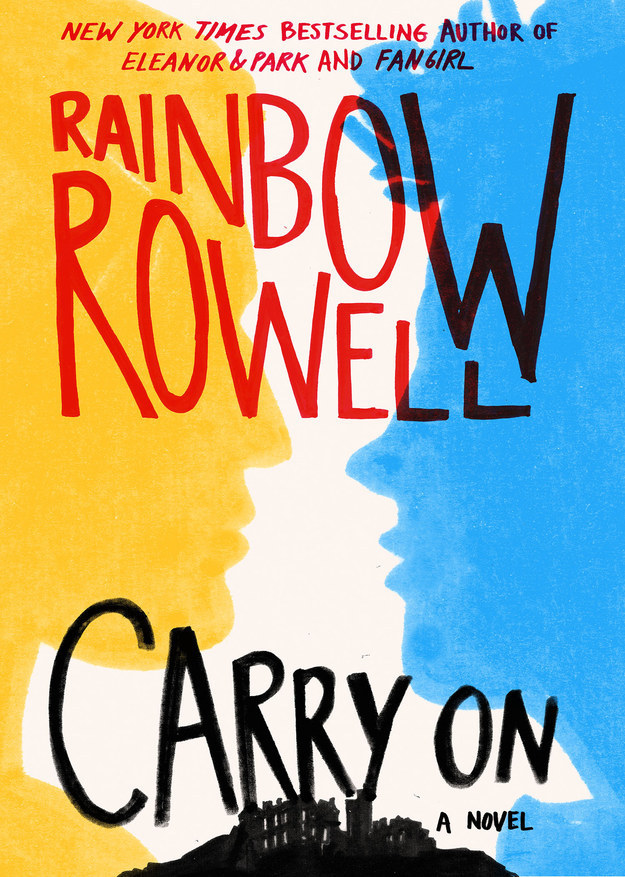
Carry On by Rainbow Rowell


Image result for carry on book cover

Carry On by Rainbow Rowell
Lexile Measure: 570L
Age Range: 14-17
Bibliographic Information: Rowell, R. (2015). Carry on. New York, NY: St. Martin’s Press.

#1 New York Times bestselling author. Named “Best Book of 2015” by Time Magazine, School Library Journal, Barnes & Noble, and NPR.

Summary: Carry On is a fantasy novel that transports the reader into a world of magic. Simon Snow, the Chosen One, must defeat the evil Humdrum, who is trying to destroy the magical world in the United Kingdom. The novel takes place during Simon’s final year at Watford School of Magicks. During the absence of his roommate and arch nemesis, Baz, Simon receives a message from a ghost, urging him to find the ghost’s killer. Simon believes that the ghost was seeking Baz, who is not at school. At first, Simon believes that Baz is plotting against the Mage, the leader of the magical world, hence his absence from school. However, Baz was actually kidnapped by troll-like numpties. When Simon tells Baz about the ghost, Baz is deeply troubled and determined to find his mother’s killer. Simon, Baz, and two other friends, Penelope and Agatha, join together to solve the murder of Baz’s mother. The story is filled with adventure, romance, and whole lot of monsters.

Learning Activity:
Readers will see the different characters in the novel face unique challenges. These challenges will force the characters to develop in certain ways. Students will read Carry On and use conflict to show how the author develops characterization. Students will focus on one character and create a literary timeline of how the character changes throughout the novel.

Standards:
CCSS.ELA-Literacy.RI.8.6 Determine an author’s point of view or purpose in a text and analyze how the author acknowledges and responds to conflicting evidence or viewpoints.
CCSS.ELA-Literacy.RI.9-10.3 Analyze how the author unfolds an analysis or series of ideas or events, including order in which the points are made, how they are introduced and developed, and the connections that are drawn between them.

Objective:

  1. Students will consider the feelings of a character of their choosing and how their reactions to conflict help develop them into a stronger character throughout the book (A).
  2. Students will use background knowledge of literary devices such as conflict and characterization (K).
  3. Students will map out their character’s development on a literary timeline. This timeline will show how the character has evolved throughout the novel by using critical thinking skills and inference (S).

Friday, December 15, 2017

Are you there god? It's me, Margaret, by Judy Blume

Blume, Judy. Are you there God? It's me, Margaret. New York; Atheneum Books, 2014.
Lexile Level: 570L
Target Age: Grades 5-7
Alignment:
Learning Standards
CCSS.ELA-LITERACY.RI.6.2
Determine a central idea of a text and how it is conveyed through particular details; provide a summary of the text distinct from personal opinions or judgments.
Learning Goals
Students will answer questions philosophical questions from different religious perspectives.
Learning Objectives
(Cognitive) Students will complete a Basic Beliefs Sheet  for their assigned religion.
(Affective) Students will participate in roundtable discussion in which they will answer questions from the perspective of different religions and philosophies.
(Psychomotor) Students will create an artifact that exemplifies their understanding of the concept of ritual.
Learning Outcomes
Students will engage in research and discussion about religious beliefs free from personal opinions and judgments.
Learning Activity:
Students will conduct research into Catholicism and Judaism, the two religions that are discussed in the book, as well as other philosophies and religions. When the students have explored all of the aligned texts, they will work in groups to come up with a Basic Beliefs Sheet for the religion/philosophy they are assigned. To synthesize what they have learned, we will hold a roundtable discussion where students will answer questions posed to the class from their basis of understanding of the religion/philosophy they are researching.
Possible questions:
·         What is your holiest day?
·         Tell us about a ritual you have.
·         What do you believe happens when we die?
·         What is the most important thing about your religion/philosophy that you think others should know?
Students will create an artifact with the theme of ritual. It does not have to be from any religion, but should show their understanding of what a ritual is. For example, a students might sew a pillow that they use to sit on and read in the morning before school.

Non-fiction Alignment 1

Charing, Douglas. Eyewitness Judaism. New York: DK Publishing, 2016.
Lexile Level: 600L
Students will read this text to get a better idea of what Judaism is all about. In the fiction book, Are you there god, it’s me, Margaret, the main character tries to decide if she might be Jewish. She looks up to her Grandmother, who is Jewish, and even tries to go to the temple with her. Students will look for key facts about Judaism to add to their Basic Beliefs Sheet.

Non-fiction Alignment 2

DK Publishing. What do you believe (Big Questions)?  New York: DK Publishing, 2011.
Lexile Level: 700L
This text will prepare students for the roundtable discussion at the conclusion of the unit. As they learn about the different religions in the texts, they can start to practice answering the big questions in this book from different religious perspectives.

Non-fiction Alignment 3

Baylor, Bird. Illus. Peter Parnall. The Way to Start a Day.  New York: Scribner, 1978.
Lexile: 690L
Awards: ALA Mildred L. Batchelder Award
 ALA Notable Children's Books
 Aesop Award
 Agatha Award Finalist
 Caldecott Honor Book
 Horn Book Fanfare

This book was chosen for this activity because it is more about rituals of how people all around the world welcome the new day. It will help students to see that rituals are a part of people’s spirituality, and that not every ritual is defined by a religion.

Non-fiction Alignment 4

Lynne, Courtney. I’m an atheist and that’s ok. Create Space Independent Publishing Platform, 2016.
Lexile Level: 720L
Margaret, our protagonist from the fiction book, sees religion as a one or the other situation. She wants to know if she can join the YMCA or the Jewish Community Center. She does not seem to be aware of atheism. This non-fiction text explains what atheism is and answers questions about atheist’s beliefs. This will be a perspective that will be represented in the roundtable discussion at the conclusion of the unit.

Non-fiction Alignment 5

Education World. Lesson Planning Ideas: The World’s Religions. Retrieved from http://www.educationworld.com/a_lesson/world-religions-multicultural-diversity.shtml
To stop our research at Judaism, Christianity, and Atheism would give students the impression that those are the only choices of religion. This website features many different religions and some of their holidays. Students can research one holiday of their choice, preferably from a religion that they know little about. What they learn will be recorded in the Basic Beliefs Sheet and will be represented in the roundtable discussion.