Showing posts with label Historical Fiction. Show all posts

Thursday, December 21, 2017

The Boy in the Striped Pajamas by John Boyne

This book was used in my Standards Aligned Literature Grouping which can be found in its entirety in another blog post.

Fiction Book
Boyne, John. The Boy in the Striped Pajamas. David Fickling Books, 2006.
Lexile: 1000L
Grades: 6-8
Topics/Tags: Historical fiction, Holocaust, Concentration camps, World War II
Summary: Bruno, a nine-year old German boy, moves to a new house after his father has received a promotion. The house is far away and there is no one for Bruno to play with. There is a tall fence running alongside the house as far as the eye can see. While exploring one day, Bruno meets a boy on the other side of the fence - a boy in striped pajamas. This boy’s life is very different from Bruno’s and their friendship has devastating consequences.


Alignment:
Learning Standards:
  • Grades 5-8 Common Core Reading Standards for Literacy in History/Social Studies (NYS)
    • Key Ideas and Details
  1. Cite specific textual evidence to support analysis of primary and secondary sources.
  • Integration of Knowledge and Ideas
7.    Integrate visual information (e.g., in charts, graphs, photographs, videos, or maps) with other information in print and digital texts.
  • Common Core English Language Arts Standards Grades 6-12
    • Responding to Literature
11.   Respond to literature by employing knowledge of literary language, textual features, and forms to read and comprehend, reflect upon, and interpret literary texts from a variety of genres and a wide spectrum of American and world cultures.
  • AASL Standards For The 21st-Century Learner
    • 1.1.6 Read, view, and listen for information presented in any format (e.g., textual, visual, media, digital) in order to make inferences and gather meaning.
    • 1.1.7 Make sense of information gathered from diverse sources by identifying misconceptions, main and supporting ideas, conflicting information, an point of view or bias.


Learning Goals:
  • Learners will be introduced to life for children during the Holocaust.
  • Learners will read, view, and listen for information gathered from fiction and nonfiction texts, including primary sources.
  • Learners will make sense of information gathered to create a diary entry.


Learning Objectives:
  1. Cognitive
    • Students will assess and analyze documents (both primary/secondary and fiction/nonfiction).
    • Students will understand the living conditions of children during the Holocaust.
  2. Affective
    • Using primary source documents, such as diary entries, students will be able to describe and understand the living conditions of children during the Holocaust.
    • Photographs and primary source documents will help teach students the horrors of the Holocaust for children around their age. Students will react to these sources during class and small group discussions.
  3. Psychomotor
    • Students will write a diary entry from the point of view of a child living during the Holocaust using information gathered from nonfiction and fiction texts.


Learning Outcomes:
Learners will be able to:
  • Articulate specific details about life during the Holocaust for children.
  • Gather and use information from fiction and nonfiction text to write a diary entry from the point of view of a child living during the Holocaust.


Activity:
What will children be doing? What activities will they engage in to meet the Standards, Goals, Objectives, and Outcomes?

  • Multi-day activities. Students will first read fiction text.
  • After reading text, they will manipulate the nonfiction text to find supporting factual information for the fiction text - which historical details of the fiction text are true/false.
  • The students will complete station work on the Holocaust - mimicking the Holocaust Memorial Museum. They will receive a passport of a child around their age (12-15) and follow their child’s passport around the stations, answering questions about the child (ghettos, concentration camps, liberation, resistance). The stations and passports will relate back to the texts, both fiction and nonfiction.
  • Students will write their own journal entries from the point of view of a child in Europe during the Holocaust.
    • This can be from the point of view of a child living in a ghetto, concentration camp, in hiding, or a part of a resistance movement.

Monday, December 18, 2017

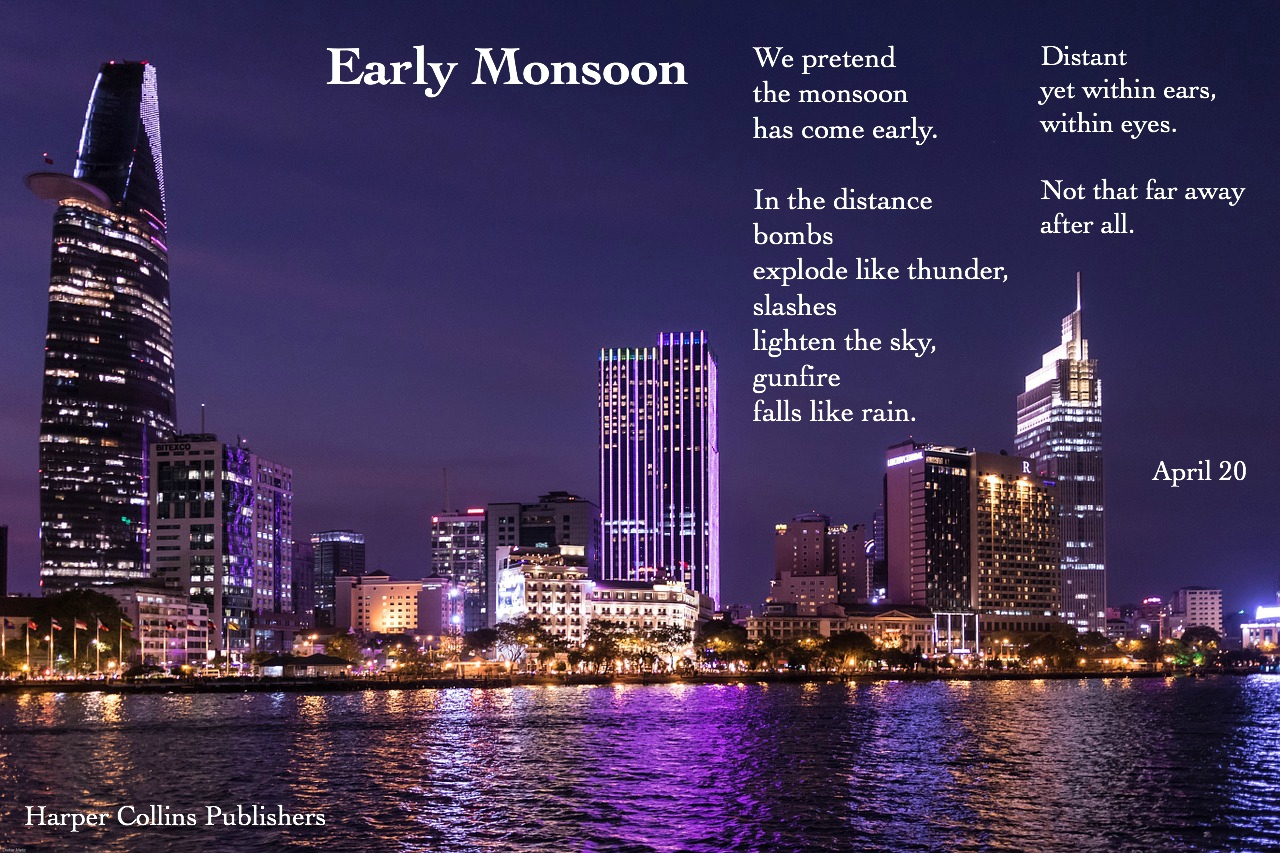
Inside Out and Back Again: A Book Review, Graphic Poem, and Learning Activity

By: Charlene V. Martoni

51LY6rGCcjL.jpgTitleInside Out and Back Again
Author/illustrator: Thanhha Lai
Genre: Poetry/novel in verse, fiction, historical fiction, realistic fiction, multicultural
Age Range: 8-12
Grade Level: 3-7
Lexile Level: 300


MLA 8 Citation: Lai, Thanhha. Inside Out and Back Again. Harper Collins, 2013.

CLICK HERE FOR THE FULL BOOK REVIEW SLIDESHOW😀

CLICK HERE FOR THE LEARNING ACTIVITY OUTLINE.

SELLING TOOL: Graphic Poem

ho-chi-minh-city-1348092_1280.jpg

The War I Finally Won written by Kimberly Brubaker Bradley


The War I Finally Won
Kimberly Brubaker Bradley
HL520L

            This book is the direct sequel to The War That Saved My Life which introduces us to Ada and her family living in England during WWII. In this follow up story, we see Ada as she grows up and must deal with the war as it affects her life in a new home with her family. The story leads to a German Jewish woman refugee moving next door to Ada’s family and their interactions, opinions, and treatment of the woman while still trying to cope with the war’s effects on the country and their lives.

Learning Activity:
The student will read through The War I Finally Won and follow along the storylines involving Ruth, focusing on Ada’s thoughts compared to her actions and how they would feel if they had to leave their home because of war. The student will comment on how their relationship changes for the better as the war progresses.

Standards:
CCSS.ELA-L.RL.5.2 - Determine a theme of a story, drama, or poem from details in the text, including how characters in a story or drama respond to challenges or how the speaker in a poem reflects upon a topic; summarize the text.
CCSS.ELA-L.RL.5.3 - Compare and contrast two or more characters, settings, or events in a story or drama, drawing on specific details in the text (e.g., how characters interact).

Goal:
The student will read the story and be able to pick out how characters act over differently over time in regard to a single storyline within the text. The student will empathize with the refugee character’s journey in the story.

Objective:
Affective -
            The student will write 1 paragraph about their thoughts on the overall storyline of Ruth’s travels to England as if they were in her place.
Cognitive -
            The student will write 1 paragraph about how they think the war and difficulties the characters experienced influenced the way they treated Ruth throughout the story.

Outcome:
The student will write 2 paragraphs describing the characters in the story and how they treat the refugee character over the course of the story. The student will write about how they feel if they were put in the disadvantaged character’s place.

The Mostly True Adventures of Homer P. Figg written by Rodman Philbrick


The Mostly True Adventures of Homer P. Figg
Rodman Philbrick
950L

            This book is about Homer P. Figg as he leaves his home in Maine and travels along the East Coast to find his brother who was drafted into the Union army. Throughout his travels, Figg encounters many adults who are varying levels of trustworthy and intelligent. The story is told in half-truths and exaggerations, as our main character is still a child he embellishes details often as he continues south on his journey.

2010 Newbery Honor Book;
2010 ALA Notable Children 's Books, Middle Readers;
NCSS Notable Social Studies Trade Books for Young People 2010, History/Life & Culture in the Americas

Learning Activity:
The students will read The Mostly True Adventures of Homer P. Figg and focus on the scenes involving Mr. Willow and the Nibbly siblings. The student will write about what happens, what Figg thinks is happening, and why the student think’s Mr. Willow refuses Figg’s warning. The student will write about what they think about the situation with the Nibbly siblings.

Standards:
CCSS.ELA-L.RL.4.1 - Refer to details and examples in a text when explaining what the text says explicitly and when drawing inferences from the text.
CCSS.ELA-L.RL.4.3 - Describe in depth a character, setting, or event in a story or drama, drawing on specific details in the text (e.g., a character's thoughts, words, or actions).

Goal:
The student will analyze the scenes involving Mr. Willow and his interactions with Kate Nibbly and her brother. The student will write about what happens and what they think about the characters’ actions that take place.

Objective:
Cognitive -
            The student will write 2 paragraphs about the characters Mr. Willow and the Nibbly siblings, focusing on how Figg sees it happening.
Affective -
            The student will write a few sentences about how they feel on the choices Mr. Willow makes even after Figg warns him what is happening.

Outcome:
The student will write 2 paragraphs about the interactions between Mr. Willow and the Nibbly siblings and how they feel about the outcome of those events.

The Queen's Pirate: Sir Francis Drake written by Kevin Jackson


The Queen's Pirate: Sir Francis Drake
Kevin Jackson
840L

            This biography covers the early life before Francis Drake accomplished his achievement of circumnavigating the world and through on to his death. Drake encounters multiple shipments of silver and gold from conquests over Spanish ships and settlements. The battles against the Spanish Armada describe the personal side of Drake's skills as a captain. After his journey around the world, he fights and wins against the Armada alongside his crew and countrymen. Upon his death from illness, he was given a sailor’s funeral and launched out to sea.

Learning activity:
The student will take a battle scene from the text and draw out the described strategies that Drake used. For sea battle to show where were his ships and the enemy's and for land battles to show where his army positioned itself against the settlement. After completion of their map, write up how this plan worked in the story and how the opposing forces reacted.

Standards:
CCSS.ELA-L.RL.7.1 - Cite several pieces of textual evidence to support analysis of what the text says explicitly as well as inferences drawn from the text.
CCSS.ELA-L.RL.7.3 - Analyze how particular elements of a story or drama interact (e.g., how setting shapes the characters or plot).
CCSS.ELA-L.RL.7.6 - Analyze how an author develops and contrasts the points of view of different characters or narrators in a text.

Goal:
After reading the text, the student will complete a pictorial and textual summary of a combat event. They will have visual representation of how sea and land battles happened during the 1500s and have information about the conflicts between England and Spain during this time. This is to be done after any Columbus activities.

Objective:
Psychomotor –
            The student will make artwork based on one of the sea battles described in the text.
Cognitive –
            The student will use the text to note on the artwork where each ship was, which nation was represented in the particular battle the student selected.
            The student will present their artwork/map to the class and using the text, explain what happened in the battle, who won, and why.

Outcome:
The student will produce an artistic representation of a battle from the text and then analysis the reasons and actions of those involved.

Separate Is Never Equal: Sylvia Mendez and Her Family’s Fight for Desegregation written by Duncan Tonatiuh


Separate Is Never Equal: Sylvia Mendez and Her Family’s Fight for Desegregation
Duncan Tonatiuh
AD870L

            This is an account of Sylvia Mendez’s experience after her family sued their school district for segregating their family because of their heritage. The story covers Sylvia’s family’s experience before, during, and after the court case.

SLJ Best Books 2014, Nonfiction
Kirkus Reviews Best Books of 2014, Picture Books
Center for the Study of Multicultural Children’s Literature, Best Multicultural Books of 2014
New York Public Library, 100 Titles for Reading and Sharing 2014, Nonfiction
Winner, IRA Notable Books for a Global Society, 2015
2015 NCTE Orbis Pictus Honor Book
2015 Pura Belpré Award, Honor, Illustrator
2015 Robert F. Sibert Medal, Honor Book
ALA Notable Books for Children 2015, Middle Readers
2015 Tomás Rivera Mexican American Children’s Book Award
2014 Cybils Awards Finalist, Nonfiction for Elementary & Middle Grades
2015 Jane Addams Award Winner, Young Readers; 2015 Ameréicas Award Winner
Capitol Choices 2015
2015 Robert F. Sibert Award Honor Book
Pura Belpré Award, Honor, Illustrator
NCSS Carter G. Woodson Book Award 2015 Winner, Elementary


Learning Activity:
After listening to the story, the student will answer the following questions about the courtroom scene: Sylvia sat watching the superintendent’s talk on the stand to the lawyer. He says the Mendez children were denied entry to his school because after he spoke with them, they didn’t know English, they had lice, tuberculosis, hygiene and behavioral problems. Sylvia is upset because his answers weren’t truthful. What actually happened to Sylvia and her family when they spoke to the superintendent? What was his actual reaction/response to them? Lastly, using the illustrations as guide, their character shapes/outlines were all the same so can the student see what is different between the characters in the story? What stood out between Sylvia and her cousins’ skin tone that caused the school to reject her but not her cousins?

Standards:
CCSS.ELA-L.RL.2.1 - 
Ask and answer such questions as who, what, where, when, why, and how to demonstrate an understanding of key details in a text.
CCSS.ELA-L.RL.2.3 - 
Describe how characters in a story respond to major events and challenges.
CCSS.ELA-L.RL.2.7 - 
Use information gained from the illustrations and words in a print or digital text to demonstrate an understanding of its characters, setting, or plot.

Goal:
The student will recount details of the story to understand that what they hear is not always the truth. The student will look over the illustrations in the story and explain the reasons for the characters’ actions within the story.


Objective:
Cognitive -
            The student reviews the story and illustrations in the book to identify the discrepancies within a character’s dialog by using evidence from earlier in the story.
            The student will use the illustrations to provide support for their reasoning why the character reacted as they did.
            The student will write 2 paragraphs on how a character’s dialog was not truthful based on evidence from the story.


Outcome:
The student will listen to the story, look through the book’s illustrations for how different characters are drawn/colored, and answer the questions provided by the teacher. The student will discuss their thoughts on court case and discrimination in schools with the teacher and class.

Selling Tools: Read Aloud
https://drive.google.com/file/d/1ag0U21XcgaBqeOf8_7WextMYxIEcQnn1/view?usp=sharing

Barbed Wire Baseball written by Marissa Moss, Illustrated by Yuko Shimizu


Barbed Wire Baseball
Author Marissa Moss, Illustrator Yuko Shimizu
800L

                This is a retelling of the experience of Kenichi Zenimura during the Japanese Internment during World War II in the southwest of the United States. This story covers when Zeni was young, how he aspired to play baseball, how he achieved his goals as an adult, and lastly how he kept his dream of baseball alive for his sons and himself while his family was imprisoned within the internment camp.

Learning Activity:
After reading through the story, the student will look over a preselected set of images from Ansel Adams’ collection of photographs from the Manzanar Relocation Center in 1943. These images will be scenes of the baseball games, children doing activities, and families together outdoors. From these images, the student will compare the images from the book to what the real photographs were like. The student will write about what is similar and what is different between the two depictions of the events at the Japanese Internment camps.

Standards:
CCSS.ELA-L.RL.4.1 - Refer to details and examples in a text when explaining what the text says explicitly and when drawing inferences from the text.
CCSS.ELA-L.RL.4.7 - Make connections between the text of a story or drama and a visual or oral presentation of the text, identifying where each version reflects specific descriptions and directions in the text.

Goal:
The student will write a compare and contrast about the real images from the historic event of the book with the drawn illustrations and fictionalized story.

Objective:
Cognitive –
                The student will observe the drawn imagery and find similarities between the illustrations and the photographs of the events.
                The student will then write about what is different between the two images.

Outcome:
The student will listen to the book, look through the selected historical photographs about the topic of the book, compare and contrast the book to the real-life images. The student will write about the differences between the two.

Inside Out and Back Again written by Thanhha Lai


Inside Out and Back Again
Thanhha Lai
800L

            This book is a series of short poems, each one written as a diary entry, by a 10-year-old girl as she becomes a refugee from Vietnam during the Vietnam War. Ha moves to the United States with her family and her poems reflect her viewpoint of leaving her homeland and going to a new and strange culture. She writes about her family, regular kid complaints about education, her brothers, bullying, and all with a backdrop of the Vietnam War events (protests and racism) that surround her in Alabama.

John Newbery Medal – 2012
National Book Award for Young People’s Literature – 2011

Learning Activity:
The students will read through the text and will select three days out of the diary entries. The student will look over what takes place on that day with Ha and her family and explain how events from entry 1 effect events from the next 2 entries and entry 2 leading to 3. The student will present their findings of the three entries in front of the class, explaining what happened and how Ha reacted to it.

Standards:
CCSS.ELA-L.RL.5.3 - Compare and contrast two or more characters, settings, or events in a story or drama, drawing on specific details in the text (e.g., how characters interact).
CCSS.ELA-L.RL.5.5 - Explain how a series of chapters, scenes, or stanzas fits together to provide the overall structure of a particular story, drama, or poem.

Goal:
The student will compare three diary entries for their connectedness throughout the story.

Objective:
Cognitive -
            The student will read Inside Out and Back Again and select three diary entries throughout the whole of the text.
            The student will identify plot elements, character descriptions or story progress and then see how those aspects of the 1st entry lead into the events of the 2nd, and the 2nd entry leads into the 3rd.
            The student will read their findings on these diary entry days to the class, describing how the events are interconnected and how each character in those entries changes over the three chapters.

Outcome:
The student will learn how the story moves across the diary entries within a non-prose format. The student will identify how the events of one day cause the events of the subsequent days.

Selling Tool:

Book Review -
Inside Out and Back Again
Thanhha Lai
Harper, 2017.
288 pages

            The book Inside Out and Back Again written by Thanhha Lai is a series of poems told through the perspective of a ten year old girl during the Vietnam War as she must move from Shanghai to Alabama to flee the conflict. The poems are short and expressive of how the main character, Ha, feels about her daily life with her family and in the transition of moving to a new country. The story is for children 8 to 12 years old and can be incorporated into a poetry lesson plan or one focusing on history about the Vietnam War.
            The story includes a backdrop of the serious issues Ha’s family faces as they immigrate to the United States, racism and bullying. But it also includes aspects of what she experienced in the war itself while she was still in Vietnam. The story takes place during the war, the actual war extended from 1955 to 1975 and when Ha’s family moved to Alabama it was during the Civil Rights movement, 1954 to 1968. That region of the country was in a lot of conflict about race and outside of the difficulties of being a refugee from a war they had to face the backlash from their new neighbors who didn’t want any change to their regular way of life.
            The story describes Ha’s travels as she leaves her home forever, how she feels to lose everything but her family, and how difficult it is to understand why it’s all happening. As the diary entries are told through poems, it makes it easy to interpret in multiple ways for students. While Ha may be writing how her brothers tease her, it’s the mention in her poem of the other children that really hurts her. The book makes good use of emotive language, she describes what happens in brief language but still can tell what is going on in her life. I found the story to be more about racism and bullying than about being a refugee. If the story had focused more on the background, the time Ha was in Shanghai with her family before fleeing, it would pull more history into the story. Overall, it’s a good story to introduce to 3rd to 5th graders when discussing this time period in American history. The difference in perspective, told as through someone their own age, provides a different story than if it was from an adult about the same topic. This might make the content more accessible to students.

The Mostly True Adventures of Homer P. Figg, by Rodman Philbrick


Author: Rodman Philbrick 
Genre: Historical Fiction
Lexile Level: 950
ISBN: 978-0439668217
Grades: 3-7
Summary: This is a story about a young Homer Figg setting off to follow his brother into the thick of the Civil War. Through a series of fascinating events, Homer's older brother has been illegally sold to the Union Army. It is up to Homer to find him and save him. Along the way, he encounters strange but real people of that era: two tricksters who steal his money, a snake-oil salesman, a hot-air balloonist, and finally, the Maine regiment who saved Little Round Top at the Battle of Gettysburg and won the war for the Union.
Book Review: This book is a great find for reluctant readers. It has very funny moments and funny names, and Homer is sure to win a reader’s heart.  It talks about Civil War, Battle at Gettysburg and slavery, which are all very important topics in US history. It is not going to leave anyone indifferent. This book will be a great addition to a unit on Civil War.
Activity: Students will be working on a poster representing a character from the book. First, students will read the book and pay attention to the characters’ behavior. Then they will pick one character and write everything they know about him or her. Afterwards, they will draw a picture of what the character might look like based on how the book describes them.  They will put the drawing on a poster paper and either write or type the info about their person underneath the picture. At the end, the students will present their posters to the class.
Variation: A different approach would be to assign the students a character, or pick two or three students per character to avoid many children doing the same character.
Standards: CCSS.ELA-LITERACY.W.4.9.A Describe in depth a character, setting, or event in a story or drama, drawing on specific details in the text (e.g., a character's thoughts, words, or actions).
Goal: Students will be able to create a short bio of a character from the book
Objectives:
·         Students will be making a poster of the character that they picked, making sure to have a picture and a paragraph describing the character.
·         Students will use complete sentences to describe their character
Outcome: Students will learn how to create a simple bio of someone
Works Cited:
Philbrick ,Rodman. The Mostly True Adventures of Homer P. Figg.  Scholastic Paperbacks. 2011