Showing posts with label Book Talk. Show all posts

Thursday, December 21, 2017

Book Talk - The Voice of the People: American Democracy in Action

Bibliographic Information: Maestro, B. & Maestro, G. (1996). The voice of the people: American democracy in action. New York, NY: Lothrop, Lee, & Shepard Books.
Intended Audience: Grades 4-8
Approach: I think my approach would be considered mood-based.
The Talk: In the early hours of the morning, people line up at firehouses, public buildings, and schools all across America. It's Election Day. By voting, American citizens exercise their right to participate in government. But, how does all that work? The Maestro's have hit a home run again with their book The Voice of the People: American Democracy in Action. This books tells you everything you need to know about how democracy in the United States works. There are colorful pictures that show off some of the prominent people and buildings of our government. With Election Day quickly approaching, you are definitely going to want to check this book out!
Here is the link to my video. Please bear with me. I have been very sick for the past week. Don't mind my appearance or my voice.

Monday, December 18, 2017

YA Bestselling Dystopian Series: A Book Talk

By: Charlene V. Martoni


Intended audience: Students age 8+


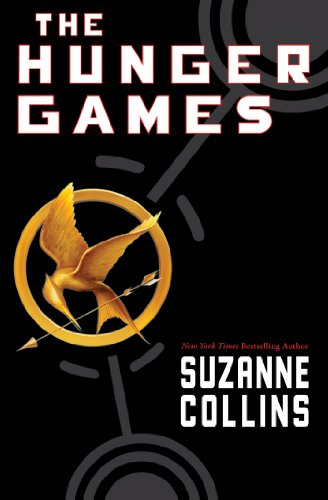
Bibliographic information: Collins, Suzanne. The Hunger Games. Scholastic Press, 2008.
Key passage: Page 19, last paragraph, through page 20—The Reaping.
Approach: Setting, character, and plot.
The talk:
  • 5/5 stars.
  • A post-apocalyptic world that used to be the United States is now called “Panem.” Panem is made up of 13 districts, but one district was destroyed because of rebellion against the government.
  • Describe The Reaping and The Hunger Games.
  • Series titles.


Bibliographic Information: Lowry, Lois. The Giver. Houghton Mifflin, 1993.

Key passage: Chapter 3—Seeing color.
Approach: Setting, character, and plot.
The talk:
  • 4/5 stars.
  • The utopia is a dystopia.
  • Jonas and the Ceremony of Twelve.
  • The Receiver of Memory.
  • Is a society without war and pain worth the absence of beauty and love?
  • Related titles.


Bibliographic Information: Rowling, J.K. Harry Potter and the Sorcerer's Stone. Scholastic Press, 1998.

Key passage: Chapter 1—“The Boy Who Lived”
Approach: Setting, character, and plot.
The talk:
  • You’ve heard of this one! You should give it a try.
  • 7 books, spinoffs, movies, and theme park = long-term reading relationship.
  • Harry lives with his aunt and uncle, locked in a closet, until he finds his home at Hogwarts.
  • Ron and Hermione.
  • Lord Voldemort vs. Harry Potter.
  • Series and related titles.

The Hunger Games: Book Talk/ReadAloud

By: Charlene V. Martoni


TitleThe Hunger Games
Author: Suzanne Collins
Genre: YA, dystopian, science fiction
Age Range: 12+
Grade Level: 7+
Lexile Level: 810L

Why it's popular now! (Click for full list of awards this book has received!)


MLA 8 Citation: Collins, Suzanne. The Hunger Games. Scholastic Press, 2009..

CLICK HERE FOR THE FULL SLIDESHOW😀

BOOK TALK:


Book talk: Why the sky is far away

Bibliographic Information:
Gerson, Mary-Joan, and Carla Golembe. Why the sky is far away: a Nigerian folktale. Little, Brown and Company, 1995.
Folk tale/Myth, AD670L

Intended Audience:
Pre-K, Kindergarten, 1st - 2nd grade

Key passage:
"In the beginning, the sky was very close to the earth. In that time, men and women did not have to sow crops and harvest them. ... Anybody who was hungry just reached up, took a piece of the sky, and ate it."

Approach:
  Scene-based. Main character is the setting, the sky. Hand motions and voices for the individual characters. Loud booming voice for the sky when it angrily talks to the humans.

Notes for Booktalk: Keep names pronounced properly, focus on stressing action words when speaking. Explain folk tale/origin myths.

The talk: Write the script of your book talk here. You can use full prose or a clear enough outline that can be easily followed by the rest of us.


"In the beginning, the sky was very close to the earth. In that time, men and women did not have to sow crops and harvest them. ... Anybody who was hungry just reached up, took a piece of the sky, and ate it."

This is the story that explains why the sky is far away, retold by Mary-Joan Gerson. It is a Nigerian folk tale that explains how certain things in our world came to be. It is an etiological myth, a story that explains how something came into existence.

This is a great book to introduce the idea of folk tales to pre-kindergarteners to 2nd grade students. Often they will ask 'why' to aspects of the world they experience. This will show them these questions have been asked throughout the ages.

Why the Sky is Far Away will introduce the children to the idea of conservation and the dangers of wastefulness in an easily understandable way. The story follows the sky and it's interaction with the human world. We switch to the character of Adese, a vain and proud woman, who ends up abusing the gift the sky had given us.

This book is also a way to introduce stories from other cultures. As a folk tale from Nigeria, the students can hear about how another culture explains how parts of the world came to be.

If you're interested in other African folk tales, I suggest How the Zebra Got His Stripes and How Giraffe became so Tall retold by Andrea Florens.

Thank you for listening to my book talk.

"We now see, as the wise [people] did then, that the future of nature and its gifts rests in our own hands."

Video: https://drive.google.com/open?id=0Bxp1ys6gy6hxR0NQX0lKdkhLMnM

Why the Sky is Far Away Retold by Mary-Joan Gerson


Why the Sky is Far Away
Retold by Mary-Joan Gerson
AD670L

            A Nigerian folk tale about why we have to work to get our food. Once long ago, the sky was just a bit above us, anywhere we humans went we could reach up and grab a piece of the sky and it would taste like regular food. The sky could taste like fruit or meat, and everyone was able to be fed from the sky this way. But people are wasteful and take more of the sky than they need, so the sky threatens to leave us humans and float out of reach forever. When a woman disregards the sky's warning and throws out a piece of the sky she couldn't finish eating, the sky leaves and flies far, far away.

Garden State Children's Book Award -  1991

Learning Activity:
            After reading the story, ask the student questions about the character Adese and the moral of the folk tale.
            How did Adese anger the Sky?
            Why do they think she took a piece that was too much for her?
            What did everyone learn to do after the Sky flew up far away?
            How can we use nature so that we don't repeat Adese's mistake?

Learning Standards:
CCSS:ELA-L.RL.2.2  Recount stories, including fables and folk tales from diverse cultures, and determine their central message, lesson, or moral.
CCSS:ELA-L.RL.2.3  Describe how characters in a story respond to major events and challenges.
CCSS:ELA-L.RL.2.6 Acknowledge differences in the points of view of characters, including by speaking in a different voice for each character when reading dialogue aloud.

Goals:
The student will understand the central conflict of the folk tale, the motives for Adese and the Sky, and explain the meaning of the story.

Objective:
Cognitive –
            The student will be able to answer the question prompts using evidence from the story.
            The student will come up with 3-4 possible ways we can be less wasteful in our daily lives so we can avoid repeating Adese’s mistake.

Outcome:
The student will be able to take the message of the story into other readings and practices on environmentalism.

Selling Tool: Book talk video -
https://drive.google.com/file/d/0Bxp1ys6gy6hxR0NQX0lKdkhLMnM/view?usp=sharing

How full is Your Bucket? For Kidsб by Tom Rath and Mary Reckmeyer

 
Authors: Tom Rath and Mary Reckmeyer
Genre: Easy Fiction
Lexile Level: 560L
ISBN: 978-1595620279
Grades: k-4
Summary:  Felix sometimes doesn’t feel like treating everyone around him nicely. So grandpa tells him about the invisible bucket that every person has, that appears to fill up or dip, based on our emotions. Of course, Felix didn’t believe him, until one day he woke up to see the bucket over his head.
Book Talk: This is a nice and warm book which any child will love! Older brother Felix thinks his sister is too little to build a tower and tells her to leave. After she gets mad and whacks his tower, grandpa decides to step in. I really liked the creative way that grandpa used to teach kindness and empathy: every person has a bucket over their heads. When a person feels good, drops of water fall in the bucket. When the person is sad, drops of water fall out of the bucket. The kids love the colorful illustrations and the happy ending in the end.
Activity: Students will have the book being read to them and discuss Felix’s and his sister’s actions. Then the students will practice saying nice things to other students in the class. Have a big bucket drawn on the whiteboard and have students come up and draw one drop of water while saying their compliment. Guide and probe when necessary and provide examples.
Variation: have students draw their own buckets and keep track of their happy moments through the day. Also, have them drawn a big bucket on a poster paper and in each of their drops, write their compliment. Hang it in the classroom or in the hallway.
Standard: With guidance and support from adults, produce writing in which the development and organization are appropriate to task and purpose. 
Objective:
·         Students will say a compliment to at least two of their classmates to help them fill their bucket
·         Students will draw a drop of water in the bucket on the white board with a big bucket while saying the compliment to one of their classmates
Outcome: Students will practice saying compliments and being kind
Works Cited:
Rath, Tom and Reckmeyer, Mary. How full is your bucket? For Kids. Gallup Press. 2009