Showing posts with label Folk Tale. Show all posts

Monday, December 18, 2017

Storytelling: Finnesburg Fragment


            The source of my story for this assignment is the Finnesburg Fragment from the Beowulf manuscripts. The tale itself is only partially found within the manuscripts, the pages that continue the story have since been destroyed due to time and a fire within the library where they were stored at centuries ago. The authors of Beowulf and the Finnesburg Fragment are unknown. The most commonly accepted source is attributing Beowulf stories as oral narratives which became written down well after their creation. Within Beowulf, the Swedish-Geatish wars are described and have some historical backing on the events and characters that appeared compared to real life events that are known of the time. This places the time frame of when the story could have first been written at around the 12th to 13th century CE.
            The Finnesburg Fragment is often apart from the main text of the Beowulf manuscripts. The story does not take place within the setting of Beowulf and does not appear as a story that someone within that tale is telling, the Tragedy of Hildeburh is told in story within Beowulf and as such is included within its main text in translations. Within the text, the story describes an attack at night at the city of Finnesburg, or the city of Finn. Finn is the ruler of the Frisians and had married a woman named Hildeburh in order to make peace between the Frisians and the Danes. Yet this was not enough to stop the conflict outright and the Danes attacked Finnesburg. The story focuses around Hnaef, Hildeburh’s brother, who holds the hall with 50 strong warriors over the course of 5 days onslaught. During this time in history, combat was usually during the daylight hours and very short durations of a few hours at most. Having this combat supposedly last days on end is to evoke how grueling and still brave the Frisian men were in protecting their home.
            The story does not have a proper end here within the Finnesburg Fragment. The story finishes as we know it as a wounded warrior turns to his leader, Hnaef, and declares his armor and weapons are in tatters and he can no longer continue fighting. The story of Hildeburh is continued in Beowulf itself. We find out that her family was slaughtered and only she remains alive after the battle ended. She mourns the loss of her brother and her husband at funeral pyres for each. She is then taken away back to the Danes.
            This story can be used to describe epic poetry or specifically epic poetry originally in English. The great epics most known are Greek tales but Beowulf and the Finnesburg Fragment are something which can be more accessible to people than the myriad of monsters that The Odyssey has or the focus on war that The Iliad has. Beowulf contains those portions of a plot but within a shorter time frame. Focusing on just Finnesburg, the story is about men in a small span of time and about the conflict itself. This focused narrative keeps the audience interested as it is full of action and a lot of ‘proclaiming’ by different characters to one another. It all feels as if you are also going into battle with them. The physical material of the manuscript can be printed out and shown to patrons of the library to see how these stories were maintained over the centuries through scribes and how the language of English developed from Old English to Modern English. I have included my own translation below which is what I read from in the video. This includes the Finnesburg Fragment and the Tragedy of Hildeburh (which I did not read but felt to include to get the full story.)

Storytelling: The Little Old Woman Who Lived in a Vinegar Bottle


The Little Old Woman Who Lived in a Vinegar Bottle
https://drive.google.com/file/d/122DcDsuMN9txQrC8HYCTQA0yuUONvUpL/view?usp=sharing

Book talk: Why the sky is far away

Bibliographic Information:
Gerson, Mary-Joan, and Carla Golembe. Why the sky is far away: a Nigerian folktale. Little, Brown and Company, 1995.
Folk tale/Myth, AD670L

Intended Audience:
Pre-K, Kindergarten, 1st - 2nd grade

Key passage:
"In the beginning, the sky was very close to the earth. In that time, men and women did not have to sow crops and harvest them. ... Anybody who was hungry just reached up, took a piece of the sky, and ate it."

Approach:
  Scene-based. Main character is the setting, the sky. Hand motions and voices for the individual characters. Loud booming voice for the sky when it angrily talks to the humans.

Notes for Booktalk: Keep names pronounced properly, focus on stressing action words when speaking. Explain folk tale/origin myths.

The talk: Write the script of your book talk here. You can use full prose or a clear enough outline that can be easily followed by the rest of us.


"In the beginning, the sky was very close to the earth. In that time, men and women did not have to sow crops and harvest them. ... Anybody who was hungry just reached up, took a piece of the sky, and ate it."

This is the story that explains why the sky is far away, retold by Mary-Joan Gerson. It is a Nigerian folk tale that explains how certain things in our world came to be. It is an etiological myth, a story that explains how something came into existence.

This is a great book to introduce the idea of folk tales to pre-kindergarteners to 2nd grade students. Often they will ask 'why' to aspects of the world they experience. This will show them these questions have been asked throughout the ages.

Why the Sky is Far Away will introduce the children to the idea of conservation and the dangers of wastefulness in an easily understandable way. The story follows the sky and it's interaction with the human world. We switch to the character of Adese, a vain and proud woman, who ends up abusing the gift the sky had given us.

This book is also a way to introduce stories from other cultures. As a folk tale from Nigeria, the students can hear about how another culture explains how parts of the world came to be.

If you're interested in other African folk tales, I suggest How the Zebra Got His Stripes and How Giraffe became so Tall retold by Andrea Florens.

Thank you for listening to my book talk.

"We now see, as the wise [people] did then, that the future of nature and its gifts rests in our own hands."

Video: https://drive.google.com/open?id=0Bxp1ys6gy6hxR0NQX0lKdkhLMnM

How the Elephant Got His Trunk retold by Andrea Florens and Angela Sinclair


How the Elephant Got His Trunk
Retold by Andrea Florens and Angela Sinclair
AD210L

            This is an African folk tale about how the elephant got his very long trunk. The elephant used to have short, stubby noses in the beginning. But when a draught happens, and the only accessible water is from the river, the elephants dare drink from it. An alligator coms and bites the elephant on the nose and pulls with all its might to drag it into the water. The elephant’s nose grew longer and longer as it pulled until it became the trunks we know today.
Learning Activity:
The students will listen to How the Elephant Got His Trunk and be able to answer questions prompted by the teacher after the reading. If they are unable to answer a part, to go back into the text and re-read that part of the story.
Standards:
CCSS.ELA-L.RI.K.3 - With prompting and support, describe the connection between two individuals, events, ideas, or pieces of information in a text.

Goal:
The student will listen to the story and be able to see how the actions of the alligator caused the elephant’s nose to get longer.
           
Objective:
Cognitive –
            The students will listen to the story and explain back to the teacher how the elephant’s trunk got so long, what happened to it to make it long, and why did the elephant not get dragged into the river by the alligator.

Outcome:
The student will be able to listen to the story and understand the sequence of events that caused the elephant to get his long trunk.

How the Zebra Got His Stripes Retold by Andrea Florens and Claire Norden


How the Zebra Got His Stripes
Retold by Andrea Florens and Claire Norden
AD210L

            An African folk tale about how the Zebra got its stripes and the animals who played a part in the event.

Learning Activity:
The students will listen to the folk tale and as the story is being read they will answer short questions about what just happened on the page. Why did the baboon hit the other animals? Where did the fire come from that burned the zebra? What did the other animals do during the fight?

Standards:
CCSS.ELA-L.RI.K.7 - With prompting and support, describe the relationship between illustrations and the text in which they appear (e.g., what person, place, thing, or idea in the text an illustration depicts).
CCSS.ELA-L.SL.K.6 - Speak audibly and express thoughts, feelings, and ideas clearly.

Goal:
The students will be able to listen to the story and be able to answer questions about the story as it is read.

Objective:
Cognative – The student will listen to the story as it’s being read.
            They will be able to answer questions the teacher asks about what is happening in the story.
            They will point out where in the illustrations answer the questions or where in the other pages the answer takes place.


Outcome:
The students will listen to the story and answer plot points based on the illustrations and story as it’s read to them.

Selling Tool: Read Aloud
https://photos.app.goo.gl/eV6Y7t2LbDytV2Yt2

Why the Sky is Far Away Retold by Mary-Joan Gerson


Why the Sky is Far Away
Retold by Mary-Joan Gerson
AD670L

            A Nigerian folk tale about why we have to work to get our food. Once long ago, the sky was just a bit above us, anywhere we humans went we could reach up and grab a piece of the sky and it would taste like regular food. The sky could taste like fruit or meat, and everyone was able to be fed from the sky this way. But people are wasteful and take more of the sky than they need, so the sky threatens to leave us humans and float out of reach forever. When a woman disregards the sky's warning and throws out a piece of the sky she couldn't finish eating, the sky leaves and flies far, far away.

Garden State Children's Book Award -  1991

Learning Activity:
            After reading the story, ask the student questions about the character Adese and the moral of the folk tale.
            How did Adese anger the Sky?
            Why do they think she took a piece that was too much for her?
            What did everyone learn to do after the Sky flew up far away?
            How can we use nature so that we don't repeat Adese's mistake?

Learning Standards:
CCSS:ELA-L.RL.2.2  Recount stories, including fables and folk tales from diverse cultures, and determine their central message, lesson, or moral.
CCSS:ELA-L.RL.2.3  Describe how characters in a story respond to major events and challenges.
CCSS:ELA-L.RL.2.6 Acknowledge differences in the points of view of characters, including by speaking in a different voice for each character when reading dialogue aloud.

Goals:
The student will understand the central conflict of the folk tale, the motives for Adese and the Sky, and explain the meaning of the story.

Objective:
Cognitive –
            The student will be able to answer the question prompts using evidence from the story.
            The student will come up with 3-4 possible ways we can be less wasteful in our daily lives so we can avoid repeating Adese’s mistake.

Outcome:
The student will be able to take the message of the story into other readings and practices on environmentalism.

Selling Tool: Book talk video -
https://drive.google.com/file/d/0Bxp1ys6gy6hxR0NQX0lKdkhLMnM/view?usp=sharing

Thursday, December 14, 2017

Honestly, Red Riding Hood Was Rotten! (The Other Side of the Story) by Trisha Speed Shashkan


Title: Honestly, Red Riding Hood Was Rotten! (The Other Side of the Story)
Author: Trisha Speed Shashkan
Lexile level: 460L

This fun story takes the classic fairytale and flips it on its head, asking readers if Little Red was the true antagonist all along?

Learning activity: Students will read the classic version of Little Read Riding Hood, and then Honestly, Red Riding Hood Was Rotten! (The Other Side of the Story). When they have completed both tales, students will compare the two stories in a descriptive paragraph that lists two similarities and two differences.

Standards:
CCSS.ELA-LITERACY.RL.3.7 Explain how specific aspects of a text's illustrations contribute to what is conveyed by the words in a story (e.g., create mood, emphasize aspects of a character or setting)
CCSS.ELA-LITERACY.RL.3.9 Compare and contrast the themes, settings, and plots of stories written by the same author about the same or similar characters (e.g., in books from a series)

Goals: Students will be able to identify differences and similarities in stories that focus on simlar topics.

Objectives: Students will write a descriptive paragraph comparing the two texts.
Students will identify two similarities and two differences.

Outcomes: Students will strengthen their ability to notice and respond to different interpretations of a text. 
Sell tool: Here 

Tuesday, December 12, 2017

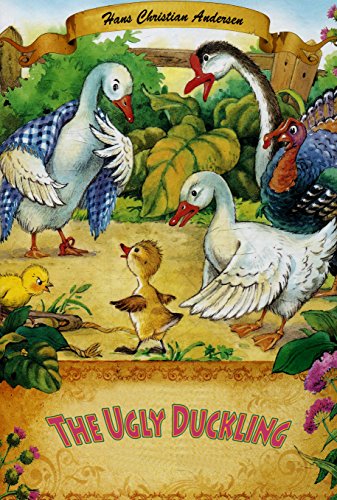
The Ugly Duckling by Hans Christian Andersen


Andersen, Hans Christian. The Ugly Duckling. 2016.
Lexile Level: 840L


Book Review

The Ugly Duckling is a beloved fairy tale by Hans Christian Andersen. It tells the story of a large, gray duckling that struggles to find acceptance. Initially, his mother brings him and his kin to the farmyard, where he is taunted and ostracized by the hens, turkeys, and even his brothers and sisters. After running away, he meets a group of wild ducks who offer to take him in, but they are then shot and killed by a group of hunters. Fleeing once more, the duckling attempts to fit in with an old woman, her hen, and her cat. The hen and the cat eventually drive the duckling off again. During a terrible winter, the duckling watches swans fly overhead and feels a kinship with them. Nearly freezing to death, he is rescued by a peasant, only to find himself fleeing their home as well. As the spring arrives, the duckling meets a group of swans who happily accept him, at which point he realizes that he was a swan, not a duckling, all along. Because of the hardships that the duckling had to endure, the titular character learns to appreciate his good fortune at finally finding his place of belonging. This tale also teaches readers the negative consequences of judging someone by their appearance, as the once ugly duckling was actually a beautiful creature, both inside and out. The Ugly Duckling is a classic for a reason, and should be enjoyed by as many readers as possible!
Learning Activity
As one of the primary themes of this tale is belonging, I thought it would make sense to have the students write two brief passages, one describing a time in which they felt bullied or ostracized, and one describing a time in which they felt accepted.
Learning Standards
CCSS.ELA-LITERACY.RL.2.2
Recount stories, including fables and folktales from diverse cultures, and determine their central message, lesson, or moral.
Goal
Students will be able to apply a moral or lesson from this story to their own experiences.
Outcome

Students will write two brief passages describing times in their life in which they felt ostracized, as the ugly duckling does throughout the story, as well as when they felt accepted, as the swan feels at the end of the story.

Gecko - Traditional Folk Tale

Intended Audience: PK - 2
Gecko. From MacDonald, Margaret Read. The Storyteller's Start-Up Book. August House Publishers, 2006.


Storytelling Video: 

Sunday, December 10, 2017

Aayoga With Many Excuses

Aayoga With Many Excuses Storytelling

Intended Audience: Children ages 4-9

Read MacDonald, Margaret. The Story-tellers Start-Up Book: Finding, Learning, Performing and Using Folktales. August House Publishers, Inc. 1993


Aayoga with many excuses
Aayoga was the most beautiful girl in her village
She knew just how beautiful she was and she would stare at her reflection.
      Just look at my dainty little eyebrows!
     Just look at my red rosy cheeks!
     Just look at my cute little mouth!
     It’s no wonder why everyone says that I am beautiful!
One day her mother called to her:
“Aayoga, go down to the stream and bring me some water. I’m going to make cheesecakes!”
But Aayoga could not be bothered. And that girl had an excuse for everything!
      Oh Mother, I couldn’t do that… I might fall into the stream
Just hang onto a branch, Aayoga. You will be alright.
     Oh no, I couldn’t do that… The branch might break.
Then hang onto a strong branch.
Oh no, I couldn’t do that… My gloves might tear.
And so on…
Her mother was frustrated.
      Then never mind Aayoga, I’ll send your sister!
And she did.
Aayoga’s sister brought water from the stream and her mother made lovely cheesecakes. When they were done they smelled so good that Aayoga looked up from her mirror.
                Give me a cheesecake, Mother.
     Oh, Aayoga, I couldn’t do that…
     They are still hot. You might burn your little hands.
             That’s no problem. I will wear my gloves.
     Oh no, you couldn’t do that… Your gloves might get dirty.
             That’s no problem, I could wash them.
Oh no, you couldn’t do that… your gloves would get wet.
And so on…
No, Aayoga, you must not touch the cheesecakes. They are too dangerous for a delicate beauty like you. I will give them to your sister.
And her mother gave Aayoga’s sister a large cheesecake. She took it down to the stream to eat.
Aayoga came and sat next to her, stretching her neck out looking…looking…
      Aayoga you can have the rest of my cheesecake, said her sister.
Aayoga was furious!
I don’t want your half-eaten cheesecake! Go away!
And Aayoga began to flap her arms at her sister.
      Go…go…go…go…go…!
Her sister started running away but Aayoga followed her making shooing motions.
      Go…go…go…go…go…!
Aayoga flapped her arms more and more.
Then something began to happen to her: She was flapping her arms like bird’s wings. Suddenly feathers started coming out of her arms. She kept stretching her long next out. Her neck began to lengthen into a goose neck. Aayoga was turning into a goose!
She kept flapping and shooing and she fell right into the stream!
But that didn’t matter to Aayoga. She now had wings and the body of a beautiful goose!
      Just look what a beautiful yellow beak I have!
Just look what smooth white feathers I have!
Just look what lovely eyes I have!
To this day the goose still lives in that stream looking at her reflection.
And so no one forgets her name, she calls out:
Aayoooooogaaaaaa, Ayooooogagaaaaa
This is the story of Aayoga who made excuses.