Showing posts with label 690L. Show all posts

Tuesday, December 19, 2017

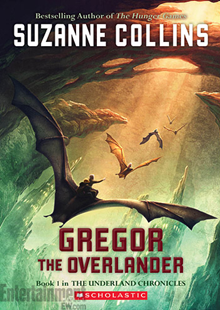
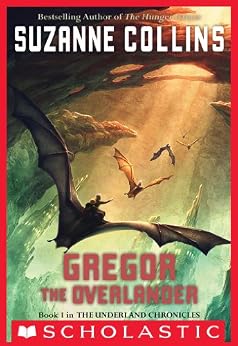
Gregor the Overlander by Suzanne Collins

Gregor the Overlander
by Suzanne Collins
MLA - Collins, Suzanne. Gregor the Overlander. New York, Scholastic, 2003.


Lexile Level: 690L


Selling Tool: We know what lives above us in the sky, but have you ever wondered what is below? Join Gregor on an epic adventure down below the surface!


Lesson Activity Question:


Learning Standards: IFC Grade 5 Standard 1 – Using information to build understanding.


Learning Goals: Students will write his or her opinions of themes throughout book and use evidence to back up ideas.


Learning Objective: Student will write different themes in a book and follow up with evidence in paragraph form citing source.


Learning Outcomes: Students will learn and understand how to express thoughts in paragraph form using evidence to support thoughts.


Monday, December 18, 2017

Gregor the Overlander written by Suzanne Collins & The Hobbit written by J.R.R. Tolkien


Gregor the Overlander & The Hobbit
Suzanne Collins & J.R.R. Tolkien
690L &  1000L

            Gregor and his baby sister Boots stumble into a portal from their home in New York into another world. He is greeted by talking insects, rats, and spiders. The humans that live in this world who come from above tend to not live that long. A prophecy about an Overlander ropes Gregor into an adventure he would rather not take part in, he just wants to go home with his sister.
            Bilbo Baggins is a solitary little hobbit in the shire, living his life quietly until Gandalf the wizard and a mess of dwarves come to visit unannounced. The quest the band of rowdy visitors is on becomes something Bilbo himself must join in. Dragons, orcs, and spiders await them on their journey and the little country hobbit just wants to go home.

Learning Activity:
Comparing the hierarchy structure in Gregor the Overlander with the that of The Hobbit, along with the depictions of their reluctant main characters, have the student outline a list of similarities and differences between the two works.

Standard:
CCSS.ELA-L.RL.5.3 - Compare and contrast two or more characters, settings, or events in a story or drama, drawing on specific details in the text (e.g., how characters interact).
CCSS.ELA-L.RL.5.6 - Describe how a narrator's or speaker's point of view influences how events are described.
 CCSS.ELA-L.RL.5.9 - Compare and contrast stories in the same genre (e.g., mysteries and adventure stories) on their approaches to similar themes and topics.


Goal:
The student will be able to identify character motivations and story structure elements between two works of the same genre.

Objective:
Cognitive -
            The student can identify motivations of main characters between two different works of the same genre and understand how the government/societies within those works function.

Outcome:
The student will write a list of similarities and differences of key details between Gregor the Overlander and The Hobbit.

Gregor the Overlander by: Suzanne Collins


Title: Gregor the Overlander

Author: Suzanne Collins


Lexile Level: 690L

Recommended for

 Age: 9 -12 years old
 Grades: Third Grade to Sixth Grade

Summary

The book titled Gregor the Overlander by: Suzanne Collins. This is the first book in the Series called the Underland chronicles. In this text is about an eleven-year  boy named Gregor, who lives in New York City.  He falls  through the grate of the laundry room located in his apartment building, in order to rescue his younger sister. This immerses him into the world of Underland, which is a  world  that has spiders, rats, cockroaches  that roam feel amongst humans. There is tension seen before the outbreak of war. Gregor is determined to find his father  and stay neutral in the war.

Learning Standard

“Use information gained from illustrations (e.g., maps, photographs) and the words in a text to demonstrate understanding of the text (e.g., where, when, why, and how key events occur).” (Reading Standards; Grade 3)

Learning Goal

Students will participate in mapmaking in this geography lesson.

Learning Objective

Students will create a map based on the world of Underland, which includes Regalia, the lands of the crawlers, spinner, and gnawers; and the portals between the Underland and the Overland, present in the text titled Gregor the Overlander by Suzanne Collins. (Psychomotor)

Learning Activity

In this learning activity, students will create a map world of the Underland. They will be placed in groups of three or four. They will discuss the text in order to pinpoint characteristics that they believe are important in the  including within the creation of the map for the world of Underland. These group will sketch a map and focus on providing accuracy based on details present in the text.

This learning activity will be assessed based their ability to utilize information present in the text, their teamwork skills and their creativity.

Learning Outcome

Students will learn how to create a map of Underland in order to understand the world present in Underland in the text titled Gregor the Overlander by Suzanne Collins


Selling Tool:  Poster 

References

English Language Arts Standards » Reading: Literature » Grade 4. (n.d.). Retrieved   

Gregor the Overlander Teaching Guide | Scholastic. (2017). Scholastic.com. Retrieved 14 September 2017, from https://www.scholastic.com/teachers/lesson-plans/teaching-content/gregor-overlander-storia-teaching-guide/

Lexile Levels Made Easy. (n.d.). Retrieved September 15, 2017, from http://www.scholastic.com/parents/resources/article/book-selection-tips/lexile-levels-made-easy

Mid-Hudson Library System --Gregor the Overlander / Suzanne Collins. (n.d.). Retrieved September 17, 2017, from http://search.midhudsonlibraries.org/iii/encore/record/C__Rb1617973__Sgregor%20the%20overlander__Orightresult__U__X7?lang=eng&suite=cobalt

New York State P-12 Common Core Learning Standards for English Language Arts and Literacy. (n.d.). Retrieved September 15, 2017, from https://www.engageny.org/resource/new-york-state-p-12-common-core-learning-standards-for-english-language-arts-and-literacy


Tuesday, December 12, 2017

Standards Aligned Literature Grouping: Sacagawea and the Lewis and Clark Expedition

Standards Aligned Literature Grouping: Sacagawea and the Lewis and Clark Expedition

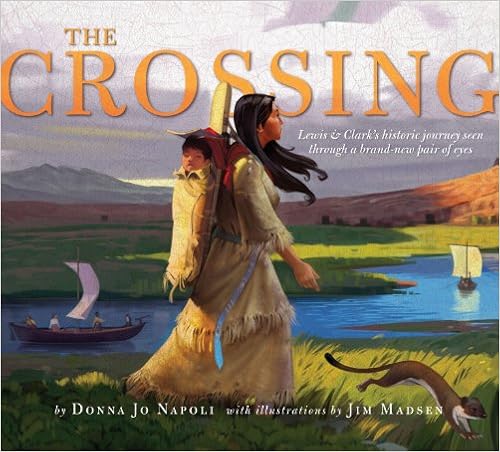
The purpose of this unit is to explore the events of the Lewis and Clark expedition through the eyes of their Native American companion, Sacagawea. Sacagawea traveled with the expedition for thousands of miles, helping Lewis and Clark navigate the land, as well as to establish relationships with the various tribes of Native Americans that they encountered along the way. The first book in this unit is the fictional title The Crossing:


The Crossing
Napoli, Donna Jo. The Crossing. Atheneum Books For Young Readers, 2011.
Lexile Level: 690


Activity for Grades 3-4

Alignment
Learning Standards

CCSS.ELA-LITERACY.RI.4.1
Refer to details and examples in a text when explaining what the text says explicitly and when drawing inferences from the text.
CCSS.ELA-LITERACY.RI.4.2
Determine the main idea of a text and explain how it is supported by key details; summarize the text.
CCSS.ELA-LITERACY.RI.4.3
Explain events, procedures, ideas, or concepts in a historical, scientific, or technical text, including what happened and why, based on specific information in the text.
CCSS.ELA-LITERACY.RI.4.6
Compare and contrast a firsthand and secondhand account of the same event or topic; describe the differences in focus and the information provided.

Learning Goals

The goal of this activity is to encourage students to utilize information from multiple text sources of varying degrees of difficulty, and combine what they have learned into a complete understanding of a historical figure's role in an important historical event.

Learning Objectives

The objectives with this activity include the three domains in Bloom's Taxonomy. For the affective domain, students will read multiple items, and organize the information that they have learned from within those items. For the cognitive domain, students will need to analyze the information that they have gained, applying it to a written assignment. Finally, for the psychomotor domain, students will be asked to prepare a written assignment.

Learning Outcome
Students will have read multiple items pertaining to one historical event. Students will then have prepared a written assignment in which they organize and articulate their knowledge regarding an important historical figure's role in an that important historical event.

Activity

The activity for this unit consists of a written assignment in which students will be asked to discuss the role of the Native American Sacagawea during the Lewis and Clark expedition. Over the course of the unit, students will read the books The Crossing, I Am Sacagawea, Lewis and Clark: A Prairie Dog for the President, The Lewis and Clark Expedition, and finally, one to two chapters from What Was the Lewis and Clark Expedition?. Students will then organize the information learned from these materials into a written response wherein they will discuss their impressions of Sacagawea's role in the expedition, paying particular attention to what information was universal across the texts, and what information may have conflicted.

Bibliographic Information of the Nonfiction Books


Meltzer, Brad, and Chris Eliopoulos. I am Sacagawea. Dial Books for Young Readers, 2017.
Lexile Level: 530L

Rationale: This picture book is an excellent biography of Sacagawea, and serves as one of the primary sources of information for the written assignment, as it focuses entirely on her. It is smartly written and, despite the lower Lexile level, speaks directly to the reader with a level of intelligence that is befitting of a more advanced book.


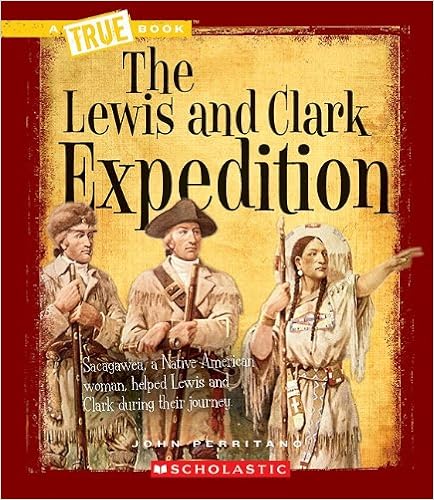
Perritano, John. The Lewis and Clark Expedition. Scholastic, Inc, 2010.
Lexile Level: 880L

Rationale: This book is bursting at the seams with facts and images about the expedition. The lexile level on this book seems a bit misleading, as the vast majority of the pages are images with bits of text to accompany them. Though this book does not feature Sacagawea as heavily as the others, it is far and away the most informative of the actual expedition itself.


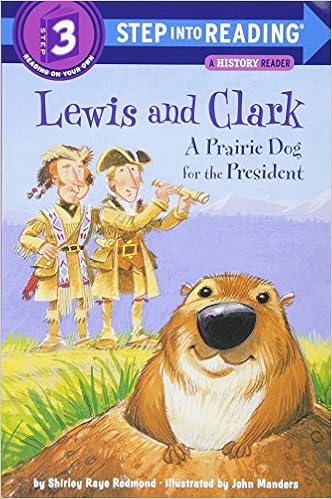
Redmond, Shirley Raye, and John Manders. Lewis and Clark: A Prairie Dog for the President. Random House Children's Books, 2003.
Lexile Level: 320L

Rationale: This easy reader is nonetheless both informative and charming in its presentation. It is a nonfiction book with a humorous spin on the expedition that will serve as both a source of useful information, as well as a bit of a break from the seriousness and challenge of some of the other titles.


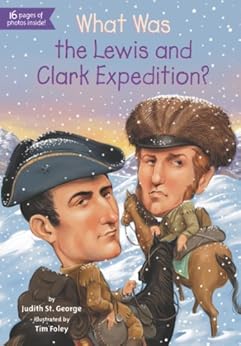
St. George, Judith, and Tim Foley. What Was the Lewis and Clark Expedition. Grosset & Dunlap, 2014.
Lexile Level: 860L


Rationale: This should be the finale book used in the unit. It is a longer book, clocking in at 108 pages. It is the most fully realized, both as as an exploration of the expedition, and as a vehicle for information regarding Sacagawea's role in the expedition. I would recommend assigning 2-3 chapters to each student, as each chapter breaks down to be around 6-8 pages of fairly complex text.

Gregor the Overlander by Suzanne Collins


Collins, Suzanne. Gregor the Overlander. Scholastic, 2003.
Lexile Level: 690L

Gregor the Overlander is a lovely, challenging book that surprised me many times. What I found particularly interesting about the book was the sense of scope that was developed by the author, Suzanne Collins. The Underworld feels massive, and is populated by, both shockingly and completely reasonably, enormous rats and insects. It's interesting to see the humans living in fear of the animals, for a change. The story line, that of a boy who is the hero of prophecy, is a bit trite, but it works well within the context of the book. If I were trying to hook a child into reading this book, I would consider telling them that this is a story about a boy who falls into an underground world and is destined to save those he finds. Or I might tell them that it's from the same author as The Hunger Games.

Learning Activity
For this learning activity, students will be asked to create either a map of Regalia, or an image depicting part of the city of the Underlanders. There are numerous descriptions of the city and its buildings, particularly in chapter 5, as Gregor first enters the city.

Learning Standards
CCSS.ELA-LITERACY.RL.4.1
Refer to details and examples in a text when explaining what the text says explicitly and when drawing inferences from the text.

CCSS.ELA-LITERACY.RL.4.3
Describe in depth a character, setting, or event in a story or drama, drawing on specific details in the text (e.g., a character's thoughts, words, or actions).

Goal
The goal of this activity is to encourage students to use the information given by the text in order to convey their understanding of one of the key environments in this story.

Objective
This activity will engage the students' psychomotor and cognitive abilities, as it requires both an understanding of the text, and the ability to transfer that understanding to an image.

Outcome
The outcome of this activity is that students will have created a drawing depicting the city of Regalia in some form.