Showing posts with label Poetry. Show all posts

Tuesday, December 19, 2017

Beastly Feasts! A Mischievous Menagerie in Rhyme by Robert L. Forbes

Beastly Feasts! A Mischievous Menagerie in Rhyme
By Robert L Forbes


Read Aloud/Book Review Click Here
Selling Tool: Beastly Feasts is so much fun, what can you do on the run?
Activity: Students will create a poem using rhyme. They will randomly pick a topic out of bucket and write 6-8 lines. After writing poem, students will have the opportunity to make artwork and present to the class.
Grade 3-5
Genre: Poetry

Monday, December 18, 2017

Inside Out and Back Again: A Book Review, Graphic Poem, and Learning Activity

By: Charlene V. Martoni

51LY6rGCcjL.jpgTitle: Inside Out and Back Again
Author/illustrator: Thanhha Lai
Genre: Poetry/novel in verse, fiction, historical fiction, realistic fiction, multicultural
Age Range: 8-12
Grade Level: 3-7
Lexile Level: 300


MLA 8 Citation: Lai, Thanhha. Inside Out and Back Again. Harper Collins, 2013.

CLICK HERE FOR THE FULL BOOK REVIEW SLIDESHOW😀

CLICK HERE FOR THE LEARNING ACTIVITY OUTLINE.

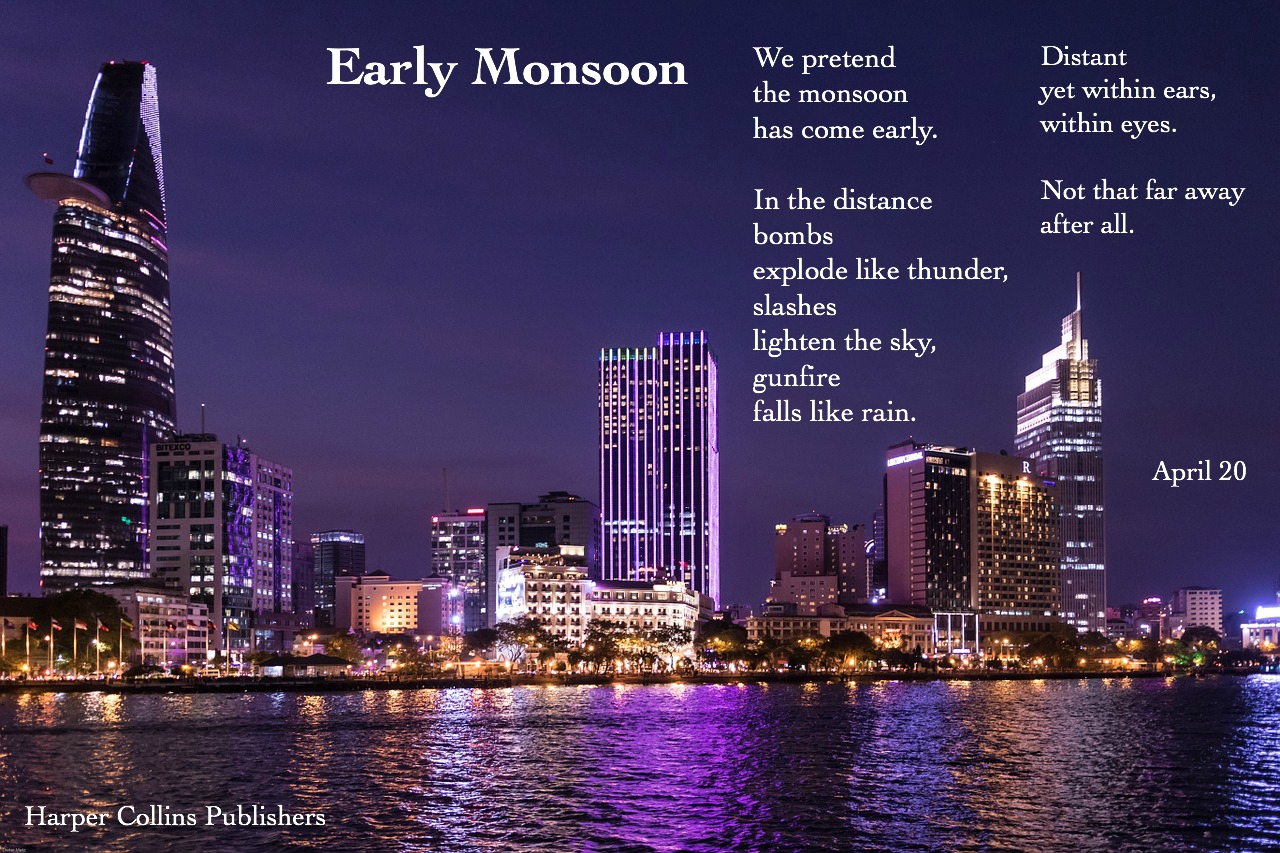
SELLING TOOL: Graphic Poem

ho-chi-minh-city-1348092_1280.jpg

Poetry for Kids: Emily Dickinson written by Emily Dickinson, Edited by Susan Snively, and Illustrated by Christine Davenier


Poetry for Kids: Emily Dickinson
Emily Dickinson, Editor Susan Snively, and Illustrator Christine Davenier
NP (Non-prose)

            A selection of Emily Dickinson’s poetry divided by the seasons. Each poem is illustrated with the text and the accompanied/assigned season it resonates with according to the editor and illustrator.

Learning Activity:
After reading through the 35 poems, select one of them and analyze why the editor and illustrator decided its season/imagery accompanying it. The student will write out what they think the reasoning for the season selection and if they agree or disagree with it, and why they think that. The student will illustrate the poem themselves with how they think it should look based on their written assessment.

Standards:
CCSS.ELA-L.RL.5.1 - Quote accurately from a text when explaining what the text says explicitly and when drawing inferences from the text.

CCSS.ELA-L.RL.5.7 - Analyze how visual and multimedia elements contribute to the meaning, tone, or beauty of a text (e.g., graphic novel, multimedia presentation of fiction, folktale, myth, poem).
CCSS.ELA-L.W.5.2.D - Use precise language and domain-specific vocabulary to inform about or explain the topic.

Goal:
The student will provide textual evidence within the poem that could answer why the editor and illustrator decided on their categorization of the selected poem. The student will interpret it themselves and illustrate what they see within the same poem.

Objective:
Cognitive -
            The student will select a poem and write a paragraph on why the editors of the book selected it’s assigned season/chapter.
            The student will write a few sentences on their own interpretation of the poem and which season they would have selected for it.
Psychomotor –
            The student will create an illustration based on their written analysis on the poem they selected.

Outcome:
The student will listen to the poems within the book, select a poem from it, and use the text to explain why it is categorized in that particular season’s chapter. They will explain their own interpretation of the poem and what they think its corresponding season is and why they think that. They will create a picture to show artistically what they wrote in their analysis.

Inside Out and Back Again written by Thanhha Lai


Inside Out and Back Again
Thanhha Lai
800L

            This book is a series of short poems, each one written as a diary entry, by a 10-year-old girl as she becomes a refugee from Vietnam during the Vietnam War. Ha moves to the United States with her family and her poems reflect her viewpoint of leaving her homeland and going to a new and strange culture. She writes about her family, regular kid complaints about education, her brothers, bullying, and all with a backdrop of the Vietnam War events (protests and racism) that surround her in Alabama.

John Newbery Medal – 2012
National Book Award for Young People’s Literature – 2011

Learning Activity:
The students will read through the text and will select three days out of the diary entries. The student will look over what takes place on that day with Ha and her family and explain how events from entry 1 effect events from the next 2 entries and entry 2 leading to 3. The student will present their findings of the three entries in front of the class, explaining what happened and how Ha reacted to it.

Standards:
CCSS.ELA-L.RL.5.3 - Compare and contrast two or more characters, settings, or events in a story or drama, drawing on specific details in the text (e.g., how characters interact).
CCSS.ELA-L.RL.5.5 - Explain how a series of chapters, scenes, or stanzas fits together to provide the overall structure of a particular story, drama, or poem.

Goal:
The student will compare three diary entries for their connectedness throughout the story.

Objective:
Cognitive -
            The student will read Inside Out and Back Again and select three diary entries throughout the whole of the text.
            The student will identify plot elements, character descriptions or story progress and then see how those aspects of the 1st entry lead into the events of the 2nd, and the 2nd entry leads into the 3rd.
            The student will read their findings on these diary entry days to the class, describing how the events are interconnected and how each character in those entries changes over the three chapters.

Outcome:
The student will learn how the story moves across the diary entries within a non-prose format. The student will identify how the events of one day cause the events of the subsequent days.

Selling Tool:

Book Review -
Inside Out and Back Again
Thanhha Lai
Harper, 2017.
288 pages

            The book Inside Out and Back Again written by Thanhha Lai is a series of poems told through the perspective of a ten year old girl during the Vietnam War as she must move from Shanghai to Alabama to flee the conflict. The poems are short and expressive of how the main character, Ha, feels about her daily life with her family and in the transition of moving to a new country. The story is for children 8 to 12 years old and can be incorporated into a poetry lesson plan or one focusing on history about the Vietnam War.
            The story includes a backdrop of the serious issues Ha’s family faces as they immigrate to the United States, racism and bullying. But it also includes aspects of what she experienced in the war itself while she was still in Vietnam. The story takes place during the war, the actual war extended from 1955 to 1975 and when Ha’s family moved to Alabama it was during the Civil Rights movement, 1954 to 1968. That region of the country was in a lot of conflict about race and outside of the difficulties of being a refugee from a war they had to face the backlash from their new neighbors who didn’t want any change to their regular way of life.
            The story describes Ha’s travels as she leaves her home forever, how she feels to lose everything but her family, and how difficult it is to understand why it’s all happening. As the diary entries are told through poems, it makes it easy to interpret in multiple ways for students. While Ha may be writing how her brothers tease her, it’s the mention in her poem of the other children that really hurts her. The book makes good use of emotive language, she describes what happens in brief language but still can tell what is going on in her life. I found the story to be more about racism and bullying than about being a refugee. If the story had focused more on the background, the time Ha was in Shanghai with her family before fleeing, it would pull more history into the story. Overall, it’s a good story to introduce to 3rd to 5th graders when discussing this time period in American history. The difference in perspective, told as through someone their own age, provides a different story than if it was from an adult about the same topic. This might make the content more accessible to students.

Sunday, December 17, 2017

Comets, Stars, the Moon and Mars by: Douglas Florian


Title: Comets, Stars, the Moon and Mars

Author: Douglas Florian


Summary

The book titled Comets, Stars, the Moon and Mars by: Douglas Florian. This text possesses poems about the planets, comets, stars and the moon.

Here's an excerpt from the text:

"Saturn's rings turn round Saturn.
  Its moons turn round it too.
  Saturn, by turns, turns round the sun.
  Saturning through and through." (Florian 25-26).

Lexile Level: 0 non-prose text

Recommended for

Ages: 4-7 Years
Grades: Preschool to Third Grade

Learning Standard

"Describe how words and phrases (e.g., regular beats, alliteration, rhymes, repeated lines) supply rhythm and meaning in a story, poem, or song."

(Reading Standards for Literature K–5; Grade 2).

Learning Goal

Students will demonstrate knowledge of astronomy and the elements of basic poetry through this lesson.

Learning Objectives

  • Students will identify elements of poetry shown in the text titled Comets, Stars, The Moon and Mars by: Douglas Florian. 
  • Students will create their own poem, based on basic research conducted 
  • Students will create an illustration depicting the chosen object from space.


Learning Activity

This activity will focus on students engaging in a basic poetry lesson, in which they will learn elements such as rhyming and alliteration. Students will learn basic knowledge of astronomy through tools, which include completing worksheets. Students will read the text titled Comets, Stars, The Moon and Stars by Douglas Florian and will choose a planet, comet or the moon to conduct research.

Then, students will create a poem to demonstrate their knowledge of the elements of poetry and create an illustration of their chosen topic. This learning activity will occur in a four part lesson that will build upon each segment to reach the completion of this activity. A rubric will be used to assess this activity.

Learning Outcome

Students will conduct research and demonstrate their knowledge of basic astronomy. In addition, students will create a poem to demonstrate their knowledge of the elements of poetry.

Selling Tool

Poster

References

Florian, D. (2007). Comets, stars, the Moon, and Mars (p. 45). Orlando: Harcourt.

Mid-Hudson Library System --Comets, Stars, The Moon, and Mars (n.d.). Retrieved November 01, 2017, from http://search.midhudsonlibraries.org/iii/encore/record/C__Rb1768458__Scomets%20stars%20the%20moon__Orightresult__U__X6?lang=eng&suite=cobalt

New York State P-12 Common Core Learning Standards for English Language Arts and Literacy. (n.d.). Retrieved October 5, 2017, from https://www.engageny.org/resource/new-york-state-p-12-common-core-learning-standards-for-english-language-arts-and-literacy

Poetry for Young Readers: Edgar Allan Poe - Tanya Beers


Tanya Beers
IST571: Children's Literature Lit Kit
Book: Poetry for Young Readers: Edgar Allan Poe, Edited by Brod Bagert

Lesson Plan and Selling Tool:
https://docs.google.com/document/d/1DfWJ2xvsKLBuhxSyhHYcBEh_NRwABUbX9Z6iqaZgq0g/edit 

Tanya Beers
IST571: Poetry for Young Readers: Edgar Allan Poe, Edited by Brod Bagert –Lit Kit
Title: Poetry for Young Readers: Edgar Allan Poe
Author:  Edited by Brod Bagert
Lexile Level: NP
Grade Level:  3rd – 6th grade
Age Range:  8 - 12 years
ISBN #: 1402754728
Edgar Allan Poe writes poetry that is just plain creepy and enjoyable to read, if you like this 
kind of writing, which so many children do. This book is a great way to introduce Poe’s 
poetry to students; it contains thirteen poems, some are the most famous of Poe’s poetry 
and some are not as well known. There are also short passages from 8 of his short stories 
in this book. This book also includes an Introduction and a “Note to Parents” at the 
beginning of the book. Children who love poetry, scary stories, or who may not know much 
about poetry will love this book!
Lesson for 3rd graders:
Students will read Poetry for Young Readers: Edgar Allan Poe to experience poetry if
they have not already and to experience reading the poet Edgar Allan Poe.

Students will write a 2-page opinion essay about their favorite poet, why that is their favorite 
poet, and what is their favorite poem by that poet. They will also depict their general feelings 
about the poetry genre.
Students will also write their own poem that they feel expresses themselves or their interests.

Learning Standards:
Common Core ELA Writing Standards K-5 (Grade 3).
3.1 Write opinion pieces on topics or texts, supporting a point of view with reasons.
a. Introduce the topic or text they are writing about, state an opinion, and create an organizational 
structure that lists reasons.
b. Provide reasons that support the opinion.
c. Use linking words and phrases (e.g., because, therefore, since, for example) to connect 
opinion and reasons.
d. Provide a concluding statement or section.
3.3. Write narratives to develop real or imagined experiences or events using effective 
technique, descriptive details, and clear event sequences.
a.Establish a situation and introduce a narrator and/or characters; organize an event sequence 
that unfolds naturally.
b.Use dialogue and descriptions of actions, thoughts, and feelings to develop experiences 
and events or show the response of characters to situations.
c.Use temporal words and phrases to signal event order.
d.Provide a sense of closure.
3.4. With guidance and support from adults, produce writing in which the development and 
organization are appropriate to task and purpose. (Grade-specific expectations for writing 
types are defined in standards 1–3 above.)
3.11. Create and present a poem, narrative, play, art work, or personal response to a particular 
author or theme studied in class.
Learning Goal:
Students will detail their feelings about the topic of poetry and their favorite poet through 
an opinion essay and express themselves creatively through writing a poem of their own.
Learning Objectives:
1. Students will integrate their knowledge of poetry with creative writing through writing
their opinion essay. (Cognitive and Psychomotor)
2. Students will detail their feelings about the poetry genre and express themselves creatively 
through writing their opinion essay and their own poetry. (Affective)
Learning Outcome:
Students will use their knowledge of the lesson to express themselves and their opinion 
creatively through writing.

Works Cited:
Bagert, Brod. Poetry for Young People: Edgar Allan Poe. Sterling Publishing, 2008.
New York State Department of Education. (2011). New York State P-12 Common Core Learning 
Standards for English Language Arts & Literacy. Retrieved from 
 https://www.engageny.org/resource/new-york-state-p-12-common-core-learning-standards-for-
english-language-arts-and-literacy.

Selling Tool: Book Talk in Suspenseful Stories for Reluctant Readers