Showing posts with label Storytelling. Show all posts

Monday, December 18, 2017

Storytelling: Finnesburg Fragment


            The source of my story for this assignment is the Finnesburg Fragment from the Beowulf manuscripts. The tale itself is only partially found within the manuscripts, the pages that continue the story have since been destroyed due to time and a fire within the library where they were stored at centuries ago. The authors of Beowulf and the Finnesburg Fragment are unknown. The most commonly accepted source is attributing Beowulf stories as oral narratives which became written down well after their creation. Within Beowulf, the Swedish-Geatish wars are described and have some historical backing on the events and characters that appeared compared to real life events that are known of the time. This places the time frame of when the story could have first been written at around the 12th to 13th century CE.
            The Finnesburg Fragment is often apart from the main text of the Beowulf manuscripts. The story does not take place within the setting of Beowulf and does not appear as a story that someone within that tale is telling, the Tragedy of Hildeburh is told in story within Beowulf and as such is included within its main text in translations. Within the text, the story describes an attack at night at the city of Finnesburg, or the city of Finn. Finn is the ruler of the Frisians and had married a woman named Hildeburh in order to make peace between the Frisians and the Danes. Yet this was not enough to stop the conflict outright and the Danes attacked Finnesburg. The story focuses around Hnaef, Hildeburh’s brother, who holds the hall with 50 strong warriors over the course of 5 days onslaught. During this time in history, combat was usually during the daylight hours and very short durations of a few hours at most. Having this combat supposedly last days on end is to evoke how grueling and still brave the Frisian men were in protecting their home.
            The story does not have a proper end here within the Finnesburg Fragment. The story finishes as we know it as a wounded warrior turns to his leader, Hnaef, and declares his armor and weapons are in tatters and he can no longer continue fighting. The story of Hildeburh is continued in Beowulf itself. We find out that her family was slaughtered and only she remains alive after the battle ended. She mourns the loss of her brother and her husband at funeral pyres for each. She is then taken away back to the Danes.
            This story can be used to describe epic poetry or specifically epic poetry originally in English. The great epics most known are Greek tales but Beowulf and the Finnesburg Fragment are something which can be more accessible to people than the myriad of monsters that The Odyssey has or the focus on war that The Iliad has. Beowulf contains those portions of a plot but within a shorter time frame. Focusing on just Finnesburg, the story is about men in a small span of time and about the conflict itself. This focused narrative keeps the audience interested as it is full of action and a lot of ‘proclaiming’ by different characters to one another. It all feels as if you are also going into battle with them. The physical material of the manuscript can be printed out and shown to patrons of the library to see how these stories were maintained over the centuries through scribes and how the language of English developed from Old English to Modern English. I have included my own translation below which is what I read from in the video. This includes the Finnesburg Fragment and the Tragedy of Hildeburh (which I did not read but felt to include to get the full story.)

Storytelling: The Little Old Woman Who Lived in a Vinegar Bottle


The Little Old Woman Who Lived in a Vinegar Bottle
https://drive.google.com/file/d/122DcDsuMN9txQrC8HYCTQA0yuUONvUpL/view?usp=sharing

Saturday, December 16, 2017

Storytelling Presentation: The Little Old Woman Who Lived in a Vinegar Bottle


The Little Old Woman Who Lived in a Vinegar Bottle  


Click Below to View Storytelling Presentation:

Storytelling Ben Rhodes

Storytelling Discussion

I found these stories fascinating, I was especially impressed by Atwood’s Bluebeard’s Egg. Central to the theme of all five stories is how curiosity can be both a blessing and a curse, truth can be a heavy burden. In fact, in Perrault's and Atwood’s take on the Bluebeard tale, I found myself reflecting that if the central characters had not investigated their circumstances if everything would have been all right for them. Though extreme in Perrault's Bluebeard, the deaths of his former wives are a response to them looking in the forbidden room, if they did not look would they have lived happily ever after? Is Bluebeard a murderer or is curiosity the real evil? Similarly, in Atwood’s story had Sally not be so obsessed with understanding Ed would she have been happy rather than plagued by what Ed could be? It seems in these Bluebeard stories that the central theme is that there is a consequence to curiosity, should Pandora's Box be left unbidden?

Another similarity of all the stories is the central protagonist is a pretty woman. There are two things at play here, gender and beauty. Tatar looked into gender quite a bit, so I’ll take a stab at the other quality of the protagonists, beauty. Beauty is a central conceit of the characters in each story, why? Is it important that the protagonist is beautiful to juxtapose the wretchedness of the villain? But, then there’s Atwood’s story, where both characters are considered pretty? Certainly, with Grimm, Perrault, and Jacobs, beauty is aligned with fairness and innocence. Perhaps innocence in character is important because often innocence and ignorance can be seen in the same light, such as in Adam and Eve’s story, and curiosity and knowledge can be burdensome.

Link to chart - https://docs.google.com/document/d/13C7hIQf91sqSleNNq0Z023cq3zNq-xeC4tC8yI0OwOo/edit?usp=sharing

Ben from Schenevus

The Remarkable Rocket by Oscar Wilde

Title: The Remarkable Rocket
Author: Oscar Wilde
Lexile: 750L
Genre: Fairy Tale
Summary:
The remarkable rocket tells the story of a firework rocket who just can't get over himself, even as he watches his friends burst into happiness over a prince and princesses wedding. If you liked the animated characters of Beauty and the Beast, you'll sure to enjoy this satirical fairy tale.

Selling Tool:
Poster, https://www.canva.com/design/DACnJ8WJFl4/XHTeuVjPR0EXj1fZnW8VCg/view?utm_content=DACnJ8WJFl4&utm_campaign=designshare&utm_medium=link&utm_source=sharebutton

Learning Activity:
Students will work in groups to identify five words that they've never heard of before, define them, and incorporate them in a short narrative puppet show assuming the firework characters in the Remarkable Rocket.

Learning Objectives:
Students will show their understanding of newly defined vocabulary by performing a puppet show that correctly incorporates the newly defined words.
Students will understand how to define vocabulary by identifying five words that they do not know from the story Remarkable Rocket and using a reference dictionary for the definition.


Learning Goal:
Students will understand how to use reference dictionaries to identify unknown words.
Students will understand semantic and syntax of language by creating a puppet show with newly defined words.

Learning Outcome:
Students will use reference dictionaries for the purpose of identification.

Friday, December 15, 2017

Sweet Potatoes

Intended Audience: K-5
Decker, Caitlin [username]. (2017, December 1st). Sammy Buckshaw’s sweet potatoes. [Video file]. Retrieved from https://www.youtube.com/watch?v=UDfYWbRXJUs


I have chosen to tell a story called Sweet Potatoes, about a man called Sammy Buckshaw. Sammy is an older man living on the outskirts of town who learns that a road is going to be built and is unfortunately going to destroy his garden, which is his pride and joy. This story is in the oral folklore tradition of Jack Tales, as in Jack and the Beanstalk. The particular tale I am telling does not feature the character, Jack, but the style of the story is from the same tradition.

Jack Tales are an offshoot of the European “wonder tales,” which were brought to Colonial America with settlers who made their homes in the Appalachian South. The beauty of the Jack Tales is that they have a personality that is unique to the region of the telling, and nuances between individual storytellers

I embellished my telling a little bit, most noticeably by adding to the end of it. The original written tale ends in a way that I don’t think my audience, presumably elementary aged children, would understand. I did not alter the ending, but I added an explanation of sorts, that helps the listeners connect the dots and make sense of the story.

NA. (nd). The narrative style of a Jack Tale Teller. http://www.ibiblio.org/bawdy/bios/bios.html
NA. (nd). Sweet Potatoes. Retrieved from http://www.ibiblio.org/bawdy/folklore/sweet.html

Tuesday, December 12, 2017

Gecko - Traditional Folk Tale

Intended Audience: PK - 2
Gecko. From MacDonald, Margaret Read. The Storyteller's Start-Up Book. August House Publishers, 2006.


Storytelling Video: 

Monday, December 11, 2017

PARACHUTING CATS TO THE RESCUE


Intended audience: kindergarten and up

“Story 1 Parachuting Cats to the Rescue.” UUA.org, 20 July 2017, www.uua.org/re/tapestry/children/tales/session10/story1.


Sunday, December 10, 2017

Aayoga With Many Excuses

Aayoga With Many Excuses Storytelling

Intended Audience: Children ages 4-9

Read MacDonald, Margaret. The Story-tellers Start-Up Book: Finding, Learning, Performing and Using Folktales. August House Publishers, Inc. 1993


Aayoga with many excuses
Aayoga was the most beautiful girl in her village
She knew just how beautiful she was and she would stare at her reflection.
      Just look at my dainty little eyebrows!
     Just look at my red rosy cheeks!
     Just look at my cute little mouth!
     It’s no wonder why everyone says that I am beautiful!
One day her mother called to her:
“Aayoga, go down to the stream and bring me some water. I’m going to make cheesecakes!”
But Aayoga could not be bothered. And that girl had an excuse for everything!
      Oh Mother, I couldn’t do that… I might fall into the stream
Just hang onto a branch, Aayoga. You will be alright.
     Oh no, I couldn’t do that… The branch might break.
Then hang onto a strong branch.
Oh no, I couldn’t do that… My gloves might tear.
And so on…
Her mother was frustrated.
      Then never mind Aayoga, I’ll send your sister!
And she did.
Aayoga’s sister brought water from the stream and her mother made lovely cheesecakes. When they were done they smelled so good that Aayoga looked up from her mirror.
                Give me a cheesecake, Mother.
     Oh, Aayoga, I couldn’t do that…
     They are still hot. You might burn your little hands.
             That’s no problem. I will wear my gloves.
     Oh no, you couldn’t do that… Your gloves might get dirty.
             That’s no problem, I could wash them.
Oh no, you couldn’t do that… your gloves would get wet.
And so on…
No, Aayoga, you must not touch the cheesecakes. They are too dangerous for a delicate beauty like you. I will give them to your sister.
And her mother gave Aayoga’s sister a large cheesecake. She took it down to the stream to eat.
Aayoga came and sat next to her, stretching her neck out looking…looking…
      Aayoga you can have the rest of my cheesecake, said her sister.
Aayoga was furious!
I don’t want your half-eaten cheesecake! Go away!
And Aayoga began to flap her arms at her sister.
      Go…go…go…go…go…!
Her sister started running away but Aayoga followed her making shooing motions.
      Go…go…go…go…go…!
Aayoga flapped her arms more and more.
Then something began to happen to her: She was flapping her arms like bird’s wings. Suddenly feathers started coming out of her arms. She kept stretching her long next out. Her neck began to lengthen into a goose neck. Aayoga was turning into a goose!
She kept flapping and shooing and she fell right into the stream!
But that didn’t matter to Aayoga. She now had wings and the body of a beautiful goose!
      Just look what a beautiful yellow beak I have!
Just look what smooth white feathers I have!
Just look what lovely eyes I have!
To this day the goose still lives in that stream looking at her reflection.
And so no one forgets her name, she calls out:
Aayoooooogaaaaaa, Ayooooogagaaaaa
This is the story of Aayoga who made excuses.

Tuesday, November 28, 2017

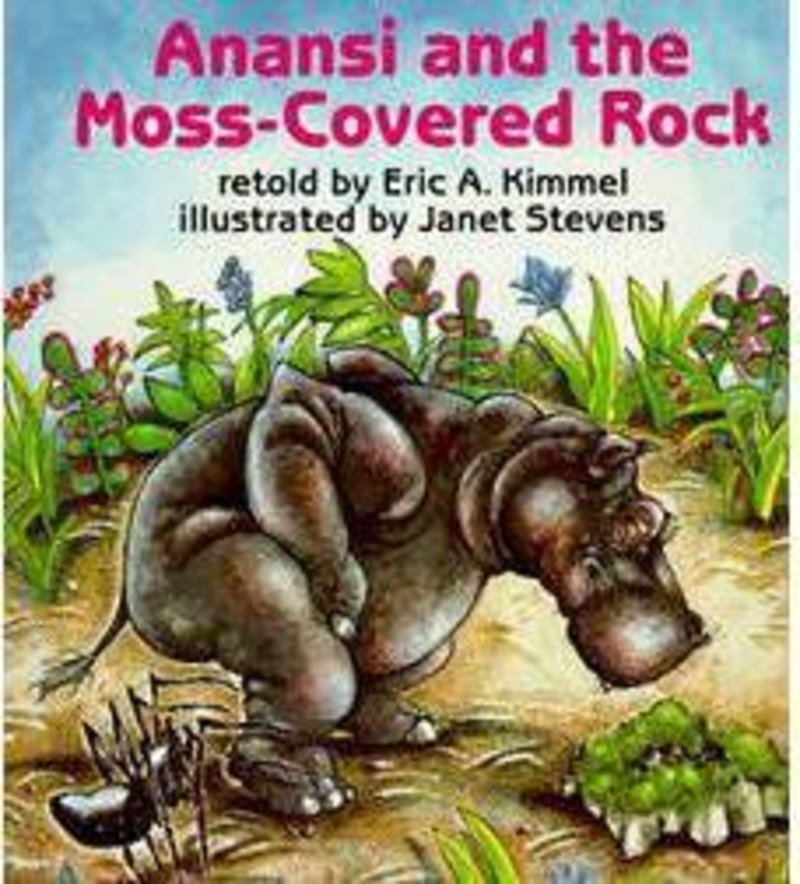
Storytelling Post: Anansi and the Moss-Covered Rock


  1. Intended Audience: PreK-K, 1-2, 3-5
  2. Kimmel, Eric A. and Janet Stevens (Illus.). Anansi and the Moss-Covered Rock. Holiday House, 1988.

Wednesday, November 15, 2017

I Have To Go

“I Have to Go”by Robert Munsch

Munsch, Robert . I Have To Go. New York: Annick Press, 1987.
Lexile: 500  Recommended for: Grades k-3

Selling Tool: Storytelling Final One
Summary: This is a story about a child named Andrew who is going through toilet training. He never wants to go pee when his parents asks him but always has to go minutes later after they leave the house or after they take 30 minutes to bundle him up in his snowsuit, or after he is in bed every single night. With tons of repetition and repetitive language this book will add humor to any classroom or elementary library.


Can be used in Library Curriculum: This book would be great to use in the classroom for a First Grade ELA lesson on teaching Problem and Solution. Students will read this book and determine the major problem and solution based on details/examples from the text. They will then apply a real world problem in their own life they may have experienced, and describe how they were able to solve that problem. Students will be making text-to-self connections through this activity. They will complete a graphic organizer and then share and discuss their own real world examples with other peers.

Extension: Students will use the IPADS to create a class video of their created  real life problems and solutions to be apart of a “Work Hard, Get Smart” Growth Mindset video on Perseverance.
Learning Outcome: Students will read I Have to Go, and identify the story’s main problem and solution with examples from the story. Students will then respond with their own problem and solution scenario to apply real world context to the ELA strategy.
Objectives
Students will identify the main problem and solution of the story “I Have to Go” by Robert Munsch. (Cognitive).
Students will connect what they read in the text to create a real world problem and solution. They will discuss their own experiences with other peers (Cognitive, Psychomotor).


Assessments:
Turn and Talks- Teacher Observation


Standards:
NYS Common Core:

Integration of Knowledge and Ideas:CCSS.ELA-LITERACY.RL.1.7

Use illustrations and details in a story to describe its characters, setting, or events.
AASL:
2.3.1 Connect understanding to the real world.
4.3.1 Participate in the social exchange of ideas, both electronically and in person.
Information Literacy Continuum:
1.1 Share what is known about the general topic to elicit and make connections to prior knowledge.

Work Cited:
Problem and Solution Printable. Teachers Pay Teachers. Retrieved on November 19, 2017 from https://www.teacherspayteachers.com/Product/ProblemSolution-Writing-printable-215651