Showing posts with label Grades K-2. Show all posts

Thursday, December 21, 2017

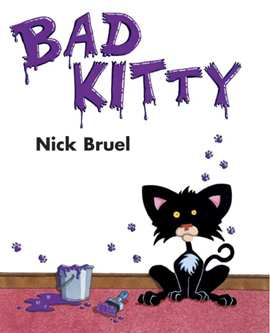
Bad Kitty by Nick Bruel

Bad Kitty
Written and Illustrated by Nick Bruel


http://vegbooks.org/wp-content/uploads/2011/05/9781596430693.jpg  https://bpljrreadingsuggestions.files.wordpress.com/2015/04/bad-kitty1.jpg
MLA
Bruel, Nick. Bad kitty. NY, NY, Roaring Brook Press, 2015.


Lexile Level
AD390L (Adult Directed)


Selling Tool
Ever wondered what happened when a kitty gets mad? Bad Kitty follows a naughty kitty through an ABC discovery of imaginative food, naughty actions, and an apology tour.


Lesson Activity Question
What could happen when one Bad Kitty gets mad?


Lesson Materials
Two Bad Kitty Books
Downloadable worksheet about drawing emotions


Learning Standards
Ask and answer questions about key details in a text.
Compare and contrast the adventures and experiences of characters in stories.


Learning Goals
Students will predict and also describe how the main character will react to events and challenges in the story.


Learning Objectives
Students will be able to predict the actions of the main character.
Students will be able to make connections of the usage of ABC to describe naughty things Bad Kitty has done and food he loves.
Students will be able to draw and recognize different emotions by using Bad Kitty worksheet from website.


Learning Outcomes
Students will understand and use predictions while reading.
Students will understand different emotions and how to react.


Note: I would tie this book with another Bad Kitty book so the students can compare.


Other Usual Tools:
http://www.badkittybooks.com/activities/

Monday, December 18, 2017

Story Hour


Yes, Virginia, there is a Santa Claus
Author: Chris Plehal
Genre: Fiction
ISBN: 978-0062001733
Grades: k-2
Summary: Based on a true story, this book is talking about a little girl, Virginia who lived in NYC in 1897, who wanted to prove to her friends that Santa Claus is real. She ended up sending the letter to the New York Sun newspaper, asking the editor is there a Santa Claus, and received an amazing response.


https://www.youtube.com/watch?v=-r7a-yh8vto 
Works Cited:
Plehal, Chris. Yes, Virginia, there is a Santa Claus. Harper Collins Publishers. 2010

Tuesday, December 12, 2017

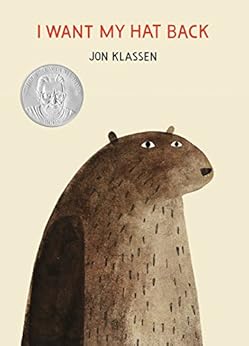
Story Hour - I Want My Hat Back

Theme of Story Hour: I Want My Hat Back


  1. Bibliographic Information:
    Klassen, Jon. I Want My Hat Back. Candlewick Press, 2011.

  2. Setting the Scene and Getting Into Character:
I would welcome everyone to the story hour as they enter the room. Once everyone has made their way in, I would ask them to have a seat on the floor around the reading area. I would then reveal the biggest, silliest hat that I can find and put it on. I would ask the children what they think about my outrageous hat and encourage them to talk about it. Then, I would ask them if they would like to see it and try it on for themselves. Once the hat has made its way around, then pull out the book, I Want My Hat Back, and begin reading it.
3. Props
 The main prop for this story hour is the silly hat
  1. Telling the Story
    While reading the story, I will constantly refer to the hat that I no longer have in my possession while emphasizing how much I want it back.
  2. Snacks
    Once the story is complete, I will ask the audience if I can have my hat back. If they say yes, we will all share hat shaped cookies to celebrate them for being so nice!
  3. Activity
    After having a snack, we will all gather at the tables with paper and markers to draw our own silly hats that we wish we could wear. The children can let their imaginations run wild!

Learning Standards
CCSS.ELA-LITERACY.SL.K.5
Add drawings or other visual displays to descriptions as desired to provide additional detail.

Goal
The goal of the activity is to encourage the children to use their imaginations to draw something fun and silly.
Objective
The objective of this activity is to engage the childrens' psychomotor skills, as well as their imaginations.
Outcome
The outcome of this activity will be that each child has a fun drawing of a silly hat that they can imagine wearing.

Monday, December 11, 2017

We’re All Wonders


By RJ Palacio
Palacio, R.J. (2017). We're All Wonders. New York, NY: Alfred Knoff.


Summary
This children’s picture book is based on the novel Wonder by RJ Polacio. We’re All Wonders explores the same theme as Wonder but it is presented in a way children can understand and relate to. Auggie looks different from the other children. Because of this, he is not accepted by his peer group. The book explores Auggie’s feelings of rejection and confusion because he doesn’t understand why it is a bad thing to be different. Using beautiful illustrations to enhance the story, the reader gets a sense that it is ok to be different.

Lexile Level: AD370L
Grades: k-2nd
Domain: Affective

Health Education Skills:

SM.E.2: Identifies the attributes (knowledge, skills, competencies) of a safe and healthy person
FLS.E.7: Individuals are unique and special and deserve to be treated with respect. 

New York State Health Education Standards:

1. Personal Health and Fitness
2. A Safe and Healthy Environment

Health Education has learning standards but is also a skills based discipline.
Goal:
Students identify differences and similarities within their own classmates. Students will develop a positive regard for others by discovering and appreciating the characteristics that are different and the same from person to person.
Objectives:
Students will identify the uniqueness of individuals in class, including physical characteristics, behaviors, talents, and feelings.
Students will discuss the importance of accepting others in a group setting.
Students will develop a positive regard for others by discovering and appreciating the characteristics that are different and the same from person to person.
Outcome: Students will create a Mr/Mrs Potato Head. Students will compare their creation to other students creations and identify two differences and two similarities.
Procedure:
Read the story, We’re all Wonders by RJ Palacio.

Ask the children to look around the room and observe how people are the same and different. Now we are going to play a game. As the teachers calls out different characteristics, (in first grade, goes to specific elementary school, has two eyes, has a belly button, likes certain activities), the student will stand up if it applies to them. We will count how many have each characteristic. Ask students if it is ok if they don’t all like the same things? Guide the students to understand it is ok if they are different or the same as each other – they are all special.

Explain that the students will be broken into small groups. Each group will get a potato head and various parts of the potato head. Each student in the group will have an opportunity to put on a part of the potato head. When each person in the group has had chance to put a piece on the potato head and all the parts have been put on, the potato heads will be collected.

The students will then have a chance to see each of the potato heads. Ask the class to pick out the ways the potatoes are similar and then ask ways that the potatoes are different.

Explain that we all have similarities and differences that can be seen; there can be similarities and differences that cannot be seen. A piece of paper with a special skill, health concern and/or challenge should have been placed inside each potato head. Examples: “I love to read”, “Math is a challenge for me”, “I have asthma and need extra time when I run”, “I am allergic to peanuts”. Open the backs of each potato head. Read the piece of paper that is found in each one. Explain how each potato head has differences that can’t be seen, you may not know that the potato head has this difference.

Explain how each group started with the same thing, a potato head, but each groups finished result is different. Explain how each one of them starts as a tiny baby but as they grew, each one of the look, feel, and act different from each other.

Conclusion: Even though we may be different from each other, we should always RESPECT each other and treat everyone with kindness.


Selling Tool


Zamudio, Monica. “View a plan.” Hotchalk Lesson Plans Page: Lesson plans by teachers for teachers, lessonplanspage.com/pemrandmrspotatoheadindividualdifferencesk1-htm/.
Thursday, November 30, 2017

Story Hour: Compassion


Story Hour : Walter The Farting Dog  


Theme of Story Hour: Compassion
Kotzwinkle, William. Walter The Farting Dog. Penguin Books, 2001.


Age Level for Story Hour: 1st-2nd Grade


Setting the scene: Was there ever a time you felt embarrassed by something you couldn’t control? Have you ever looked down at someone or felt irritated by someone for something they couldn't control? Meet Walter. He is a Dog who can't stop farting. Billy and Betty love ho,, but their Dad says he has to go because he farts too much. One night their house gets broken into by burglars. Will Walter be the hero and save the day? Or will his continue with his farty ways?


Props: Walter The Farting Dog Puppet, home setting props, Characters as dolls:Betty, Billy, Dad, Burglars


Connected Books for Display in MLA Format:
Stead, Phillip. A Sick Day for Amos McGee.Roaring Book Press, 2010.
Williams, Vera. A Chair For My Mother. Green Willow Books, 1982.
Graham, Bob. How To Heal a Broken Wing.Candlewick Press, 2008.


Activity: Teaching Compassion using details from text and self connections.


Start out after reading this book with a class discussion about habits that children have that their parents or siblings are trying to change. What do people say to them and what do they wish people would say to them? How would you like to be told about your annoying habits?  How would it make you feel?
Discuss COMPASSION and what it means. Give examples. Ask for details from the story.


Discussion: “Think of a time when you have been bothered by someone else's annoying habit and how would you respond to it with compassion.”


Students will write a short personal narrative on a real world example of a time where they showed compassion to someone else, or a time in their life when they witnessed someone showing compassion to another person. (depending on grade it will either be a paragraph or a sentence) Students will share their short narrative and respond to their peers with this Peer Feedback  exit ticket.


Outcome: Students will use knowledge of compassion that was read throughout the story to create a sentence where they have been compassionate to someone else.


Lesson Objectives:
  • Students will write a real world example about a time in their life when they have showed compassion to others. (Cognitive, Psychomotor)
  • Students will share and respond their writing with peers and be able to provide feedback/comments to their writing. (Affective, Psychomotor)


Standards:
Write narratives in which they recount a well-elaborated event or short sequence of events, include details to describe actions, thoughts, and feelings, use temporal words to signal event order, and provide a sense of closure.
AASL Standards:
3.3.5 Contribute to the exchange of ideas within and beyond the learning community.  
3.1.3 Use writing and speaking skills to communicate new understandings effectively.


Work Cited:

TeachingBooks.net: Walter The Farting Dog Lesson Plan. 2001. Retrieved on November 25, 2017 at http://www.spokenartsmedia.com/StudyGuides/Walter%20the%20Farting%20Dog.pdf