Showing posts with label 790L. Show all posts

Thursday, December 21, 2017

Love Letter to the Dead by Ava Dellaira

Love Letters to the Dead
By: Ava Dellaira
18140047
Grades: 7-12
Genre: Fiction
Lexile: 790L

Summary:  For an English assignment, Laurel begins writing letters to a dead person. She chooses Kurt Cobain because her sister, May, loved him. Like May, Kurt died young. Soon, Laurel has filled a notebook with letters to people; people like Janis Joplin, Amelia Earhart, Heath Ledger, and Amy Winehouse. Despite the assignment, she never gives a single letter to her teacher. She writes about everything - starting high school, falling in love, making new friends, her splintering family. Laurel begins to discover the truth about herself and her sister.

Click here for a book trailer.

Possible Learning Activity: Students will write letters to a person of their choice. They may choose to use their own experiences or makeup ones to write about in their letters.

Standards:
New York State Learning Standards and Core Curriculum:
CC.RL.9-10.2. Determine a theme or central idea of a text and analyze in detail its development over the course of the text, including how it emerges and is shaped and refined by specific details; provide an objective summary of the text.
CC.RL.9-10.3 Analyze how complex characters (e.g., those with multiple or conflicting motivations) develop over the course of a text, interact with other characters, and advance the plot or develop the theme.

Learning Objectives:

  1. Students will practice letter writing skills, using examples from the text.
  2. Students may choose to write about their own experiences or makeup fictional experience in their letters.
  3. Students will learn how to think critically and write in detail.

Monday, December 18, 2017

Disability and Bullying: An Adaptable Standards-Aligned Literature Grouping

By: Charlene V. Martoni


Fiction Book
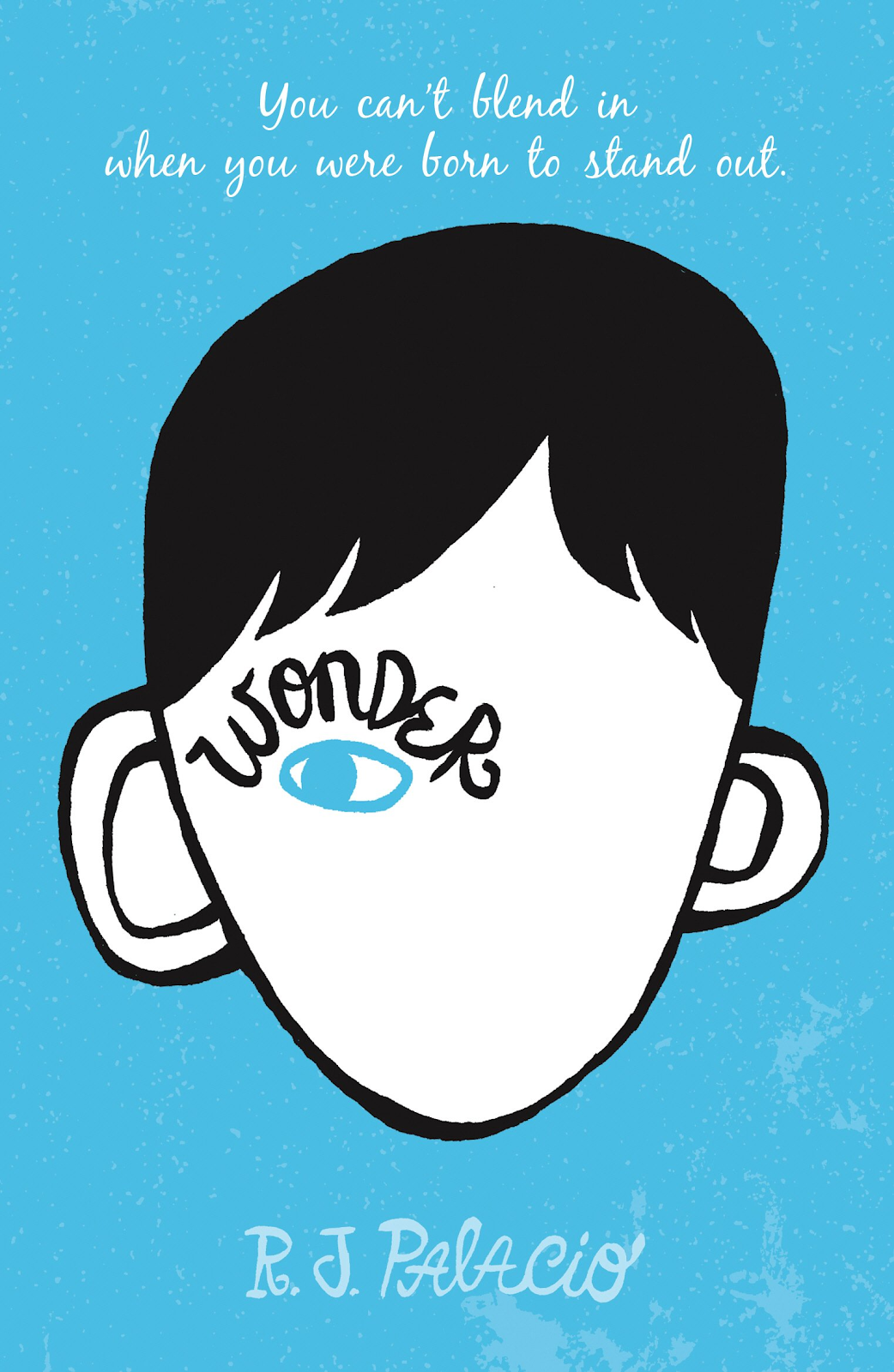
Palacio, R. J. Wonder. Knopf Books for Young Readers, 2012.
Lexile Level: 790L
Age 8-12/Grade 3-7
Grade for this activity: 7


Alignment
Learning Standards:
  • CCSS.ELA-Literacy.CCRA.R.1: Read closely to determine what the text says explicitly and to make logical inferences from it; cite specific textual evidence when writing or speaking to support conclusions drawn from the text.
  • CCSS.ELA-Literacy.CCRA.R.3: Analyze how and why individuals, events, or ideas develop and interact over the course of a text.

Learning Goal:
Students will reframe the notion of “disability” by examining how one’s differences ultimately make them who they are.

Learning Objectives:
  • (A) By responding to instructor-provided prompts, students will express how their differences contribute to who they are.
  • (S) Citing evidence from the texts, students will illustrate how plot events lead to character development.
  • (K) With clear instructions, students will recognize that a narrative story has a beginning, a middle, and an end.

Learning Outcome:
Students will make timelines that show how characters’ perceptions of their disabilities develop over the course of the texts. Students will then choose one thing that makes them feel different and create a t-chart that identifies ways this difference has positively impacted their lives. They will then write a narrative about the difference and how it contributes to who they are as a person.

Activity
  1. Choose a memoir to work with: Ugly or El Deafo. (The teacher will divide the class into small groups based on their choices).
  2. In small groups, make two timelines: one for the main character in the memoir you chose, and one for Auggie, the main character in Wonder. Each timeline should show how the character’s perception of their disability develops over the course of the book, citing specific evidence from the text. Include answers to these questions in your timelines: How does the character’s disability contribute to who they are as a person at different stages in the story? What events cause their perceptions of their disabilities to change?
  3. Individually, bring in small items that represent five things that make you different from anyone you know. Choose one item/difference, make a t-chart, and list the ways the difference has positively impacted your life. On a separate sheet of paper, answer: How did you discover that you were different? How did it originally make you feel to be different? What is one event that made you appreciate your difference? What does your difference mean to you now? How does your difference contribute to who you are as a person? Use your t-chart and answers to these questions to write a narrative (story with a beginning, middle, and end) about the difference and how it contributes to who you are as a person. Once you are finished, share your narrative with your group.

Nonfiction Alignment 1
Hoge, Robert. Ugly. Puffin Books, 2017.
Lexile Level: 0890
Rationale: While Wonder is a fictional work about physical deformity, Ugly is a memoir by a man who was born with facial and bodily deformities. Tackling similar issues as Auggie does in Wonder, Robert Hoge tells of his childhood growing up with a visible disability and the social and emotional challenges that came with it. This book can be paired with videos of the author discussing his experience and how he ultimately decided to own his own face. These multimedia resources would bring the topic of disability and deformity to life for students.


Nonfiction Alignment 2
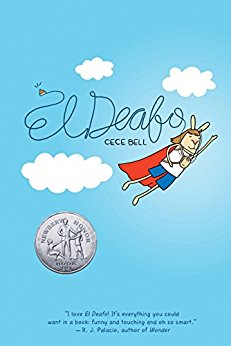
Bell, Cece. El Deafo. Amulet Books, 2014.
Lexile Level: 920L
Rationale: Like Ugly, El Deafo is another memoir about disability: hearing loss. What’s unique about this memoir is that it’s a graphic novel that takes the notion of “disability” and converts it into a notion of “different ability.” Author Cece Bell retells her experience wearing a Phonic ear that gave her a pseudo-superpower and turned her into “El Deafo, Listener for All.” Students will find this 2015 Newbery Honor Book empowering and enlightening all at once.


Nonfiction Alignment 3
Reynolds, Luke. Surviving Middle School: Navigating the Halls, Riding the
Social Roller Coaster, and Unmasking the Real You. Aladdin/Beyond Worlds, 2016.
Lexile Level: 920L
Rationale: Reading about bullying in Wonder, Ugly, and El Deafo is a good way to introduce students to the topic, but this how-to book gives them real-life tips for navigating middle school social issues, including bullying.


Nonfiction Alignment 4
Jones, Carrie, and Megan Kelley Hall. Dear Bully: 70 Authors Tell Their Stories. HarperTeen, 2011.
Lexile Level: 850L
Rationale: Students may not know it, but the beloved Goosebumps author, R.L. Stine, was bullied! This collection of short memoirs by famous authors who have experienced bullying will help students realize that some of the most famous people were once bullied. This realization should help students feel less isolated while also aiding them in developing their empathetic skills.

Wonder written by R.J. Palacio


Wonder
R.J. Palacio
790L

            This book is about the life of August Pullman, a little boy who was born with severe physical deformities. The story describes his experiences in living daily life with a disability, how people react to how he looks, and how his family and friends cope with his ailments.

ALA Notable Children’s Book
Amazon Best of the Year 2012
Barnes & Noble Best Book of the Year 2012
California Young Reader Medal 2015
Children’s Book Award 2014
Christopher Award
Colorado Children’s Book Award 2014
Dorothy Canfield Fisher Children’s Book Award 2014
Hawaii Nene Award 2015
IRA Teachers’ Choices
Illinois Rebecca Caudill Young Readers Award 2014
Indiana Young Hoosier Book Award 2015
Kentucky Bluegrass Award 2014
Kid’s Indie Next List “Inspired Recommendations for Kids from Indie Booksellers” 2012
Louisiana Young Reader’s Choice Award 2015
Maine Student Book Award 2014
Mark Twain Award 2014
Maryland Black-Eyed Susan Award 2013
National Parenting Publications Award (NAPPA) 2012
National Parenting Publications Awards (NAPPA) Gold Award
New Atlantic Independent Booksellers Association (NAIBA) Book of the Year Award 2012
New Hampshire Great Stone Face Award 2012
New Mexico Land of Enchantment Book Award 2014
New York Times Bestseller 2012
Ohio Buckeye Children’s Book Award 2013
Rhode Island Children’s Book Award 2014
Tennessee Volunteer State Book Award 2014
Texas Bluebonnet Award 2014
Vermont Dorothy Canfield Fischer Book Award 2015

Learning Activity:
After reading Wonder, the student look at how August’s friends and enemies interacted with them throughout the story. The student will write about how they feel about how Jack, Julian, or Via reacts to August. How would they feel during scenes where one of those characters said or acted hurtful to August?

Standards:
CCSS.ELA-L.RL.6.1 - Cite textual evidence to support analysis of what the text says explicitly as well as inferences drawn from the text.
CCSS.ELA-L.RL.6.3 - Describe how a particular story's or drama's plot unfolds in a series of episodes as well as how the characters respond or change as the plot moves toward a resolution.

Goal:
The student will go through the text and select 1 of 3 characters and describe what that character did during the story in relation to August. The student will write about the story and how they would feel if it happened to them.

Objective:
Cognitive -
            The student will write 2 paragraphs on one of three characters and describe how that character acted to the main character.
Affective -
            The student will write a paragraph following up on how they would feel if they were in the main character’s position when the selected character was cruel to them.

Outcome:
The student will write 3 paragraphs describing events a selected character did in the story and how the student would feel if they were in August’s place interacting with the selected character.

Sunday, December 17, 2017

Wonder by R. J. Palacio


Title: Wonder

Author: R. J. Palacio


Lexile Level: 790L

Recommended for

Grades: Fourth Grade to Sixth Grade

Summary/Book Review

The book titled Wonder by: R. J. Palacio focuses on the main character, August or "Auggie", that has been homeschooled and then introduced to a mainstream classroom during fifth grade. Auggie faces bullying due to his deformity.
 I found this interesting because its discusses the topic of whether or not Special Educational Needs (SEN) students should be introduced to a mainstream classroom. I believe that it was interesting to see Auggie’s point of view as he adjusts to a new learning environment at Beecher Prep. In addition, his older sister, Via’s point of view is interesting. 
I like the different point of views throughout the novel through Auggie and his I believe that it is important that the theme of addressing bullying occurs. I believe that middle school can be a challenging time for some students, because it from my experience middle school/junior high school students focus more on figuring out their identity as well as bonding with other with traits and interests that they have in common. If an individual is unique and do not “fit in” or possess the usual persona, this student stands out and he/she may have a harder time. This is particularly challenging as a new student. Through my own experience of being bullied in middle school, I think Auggie overcoming this obstacle as well as gaining some acceptance by his classmates and gaining friends is heartwarming. I believe that this can story can be seen as inspirational.
I love that this story possesses Star Wars references. Auggie’s attempt to shed his persona in order to fit in can be viewed a symbol of him maturing and seeking to develop new interests. I can relate to this, because I grew up liking Star Wars, which helped with the bond with my father. It is not present in my life as seen Auggie’s life, as described through the reference in the text, however, I look back fondly at memories from my childhood.
Auggie owns various Star Wars related items and he tries to change himself in order to fit in without everyone by being more mature. However, I think that Star Wars brings out the nostalgia and can be fun at any age. 
In addition, I believe that I would utilize the topic of space in order to tie an astronomy lesson about the Solar System. Students’ learning about the Solar System is a great way to discuss the specifics of each planet. The lesson would tie in what is a solar eclipse, and the cause and effect of this event. Due to this occurrence in August, I think it would be an interest to students.
Learning Standards

“1. Quote accurately from a text when explaining what the text says explicitly and when drawing inferences from the text.

  6. Describe how a narrator’s or speaker’s point of view influences how events are described.

  a. Recognize and describe how an author’s background and culture affect his or her perspective.”
     
     (Reading Standards for Literature Grade 5)

Learning Goal

Students identify the similarities and differences between the literature.

Learning Objective

Students identify the similarities and differences between the similarities and differences between the texts titled Wonder by: R. J. Palacio and The strange case of Origami Yoda by: Tom Angleberger.

Learning Activity

In this learning activity, students will read the text titled The strange case of Origami Yoda by: Tom Angleberger. In a class discussion, students will compare the similarities and differences between the texts the following texts: Wonder by: R. J. Palacio and The strange case of Origami Yoda by: Tom Angleberger. Students will learn to identify the story elements and how to cite properly from the text as well as provide an analysis of the texts. Then, students will create a visual presentation (e.g. PowerPoint) and presenting it to their peers. This learning activity will be assessed through a rubric.
Learning Outcome

Students learn how to identify the similarities and differences, create proper citations and critical analysis between the texts titled Wonder by: R. J. Palacio and The strange case of Origami Yoda by: Tom Angleberger.

Selling Tool 

Book Review


References

Mid-Hudson Library System -- Wonder / R.J. Palacio.. (2017). Search.midhudsonlibraries.org. Retrieved 16 October 2017, from http://search.midhudsonlibraries.org/iii/encore/record/C__Rb2000014__Swonder__Orightresult__U__X7?lang=eng&suite=cobalt
New York State P-12 Common Core Learning Standards for English Language Arts and Literacy. (n.d.). Retrieved October 16, 2017, from https://www.engageny.org/resource/new-york-state-p-12-common-core-learning-standards-for-english-language-arts-and-literacy
For teachers. (n.d.). Retrieved October 17, 2017, from http://rjpalacio.com/for-teachers.html 
Palacio, R. (2012). Wonder (p. 315). Alfred A. Knopf.

Wonder - Tanya Beers


Tanya Beers
IST571: Children's Literature Lit Kit
Book: Wonder by R.J. Palacio

Lesson Plan and Selling Tool:
https://docs.google.com/document/d/1ZBILy78yR63fsCfd9Hqw-rVU-Yx7UqVyW0jAt6BJ8sw/edit 

Tanya Beers
IST571: Wonder by R.J. Palacio –Lit Kit
Title: Wonder
Author:  R.J.Palacio
Lexile Level: 790L
Grade Level:  3rd – 7th grade
Age Range:  8 to 12 years
ISBN #: 0375869026
Wonder tells the story of August (“Auggie”) Pullman; a 12-year-old boy whose face is disfigured. 
He has a giant heart and only sees others for who they are on the inside. However, so many people 
failed to see him as a human being; they only see his exterior and think of him and treat him as 
someone to be feared and not accepted. Unfortunately, I think that is a very real response from 
the general public when they see someone who looks different from them. This book deals with
the emotional impact of disfigurement on the child, sister, and parents. The characters are very 
real and that adds to the emotional impact of the story. Wonder is a heartfelt story that will stay 
with you long after you have read it.
Lesson for  5th graders:
A. Students will read the book Wonder by R.J. Palacio.
B. Students will write a 3-page journal entry answering the following questions:
1. Why does Auggie want to go to school?
2. Do you think he should have gone or stayed home? Why?
3. How do you think Auggie’s sister Via feels about having a brother who looks different? 
Does she avoid him or spend a lot of time with him?
4. How do you think Auggie’s disfigurement affects his parents?
5. If you had a disfigurement, how do you think your family members would react/feel about it?
6. If someone in your family had a disfigurement, how would you react/feel about it?
7. Would you want to be friends with someone who had a disfigurement? Would the disfigurement 
even be a deciding factor in whether you would be friends with someone?
C. In a class lecture, I will talk about what “the Golden Rule” is and what “positive, constructive 
feedback of a written work” means. Then there will be a class discussion about Wonder and 
what students thought of the book.
D. Students will then trade their written journal entries with a student next to them and the 
reader of the journal entry will write down positive constructive feedback of the journal entry. 
The journal entries will then be submitted and returned to the proper students after grading so 
students can learn from the teacher and other students.   
Learning Standards:
Common Core ELA Writing Standards K-5 (Grade 5).
5.1. Write opinion pieces on topics or texts, supporting a point of view with reasons and 
information.
5.2. Write informative/explanatory texts to examine a topic and convey ideas and information 
clearly.
5.3. Write narratives to develop real or imagined experiences or events using effective 
technique, descriptive details, and clear event sequences.
Common Core ELA Speaking and Listening Standards K-5 (Grade 5).
5.1. Engage effectively in a range of collaborative discussions (one-on-one, in groups, and teacher-led) 
with diverse partners on grade 5 topics and texts, building on others’ ideas and expressing their own 
clearly.
5.2. Summarize a written text read aloud or information presented in diverse media and formats, 
including visually, quantitatively, and orally.
5.4. Report on a topic or text or present an opinion, sequencing ideas logically and using appropriate 
facts and relevant, descriptive details to support main ideas or themes; speak clearly at an understandable 
pace.
Learning Goal:

Students will engage in a class discussion and journal entry based on the reading of Wonder by 
R.J. Palacio that will make them think about how they treat others and how they want to be 
treated by others.

Learning Objectives:
1. Students will write a journal entry based on questions that will engage students in reflection of 
themselves and how feel about how they treat others and how they want to be treated by others. 
(Affective)
2. Through the class lecture, class discussion, and assigned reading, students will be able to 
write positive, constructive feed back of their classmates journal entries that will assist students 
with thinking about the written topic in a different way. (Cognitive and Psychomotor)
Learning Outcome:
Students will discover an understanding about themselves that they may not have had before 
the reading, class discussion, and journal entry assignment.
 
Works Cited:

New York State Department of Education. (2011). New York State P-12 Common Core Learning Standards 
for English Language Arts & Literacy. Retrieved from https://www.engageny.org/resource/new-york-state-
p-12-common-core-learning-standards-for-english-language-arts-and-literacy.
Palacio, R.J. Wonder. Knopf Books for Young Readers, 2012.
Selling Tool: Book Trailer for Wonder.